
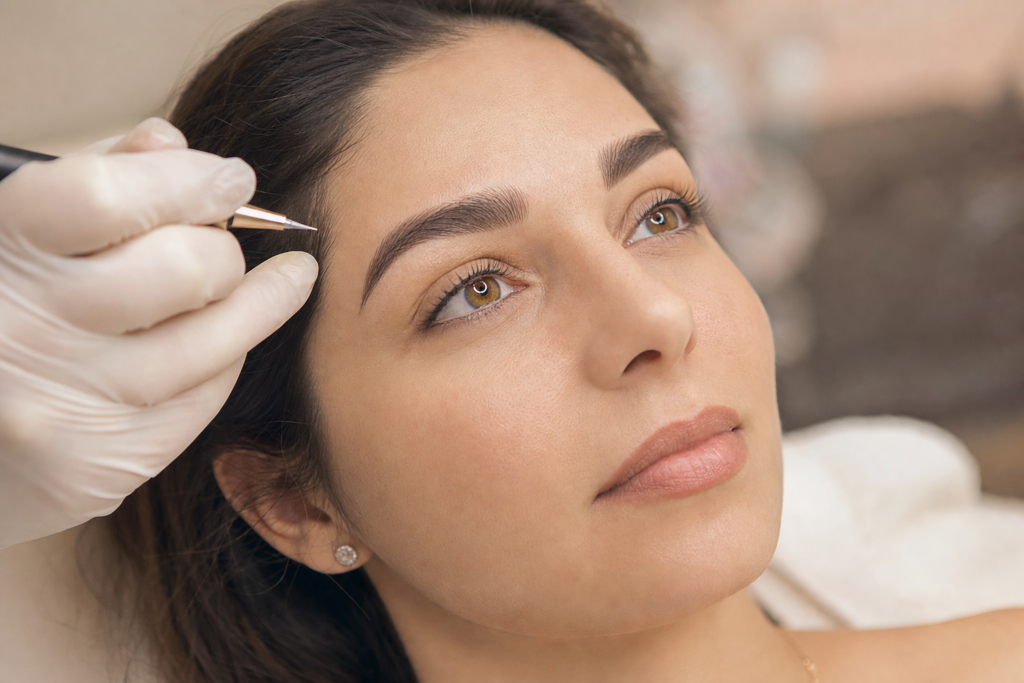
Microblading is a semi-permanent cosmetic tattooing technique that uses a specialized manual tool to create hair-like strokes in the brows, filling sparse areas and reshaping arches for a natural, defined look. Unlike traditional permanent makeup or powder brows, microblading mimics the appearance of real brow hairs by depositing pigment into the upper dermal layer of skin. The result is fuller, more symmetrical brows that last one to three years depending on skin type, lifestyle, and aftercare.
For women tired of filling in their brows every morning or dealing with patchy, uneven growth, microblading offers a transformative solution. The technique became globally recognized through the PhiBrows system, which standardized brow mapping using the golden ratio to create balanced, flattering shapes for every face. Arezoo, the first PhiBrows Master certified in Montreal since 2016, brought this precise method to Quebec, training her team to approach each client with the same artistic rigor and sterile protocol that sets the PHI Academy apart.
This guide explains what microblading is, how it differs from other brow techniques, what happens during the procedure, and how to choose the right artist. Whether you are considering permanent makeup for the first time or researching alternatives to ombre or combo brows, understanding the fundamentals of microblading helps you make an informed decision.
How Microblading Differs from Other Brow Techniques
Microblading falls under the umbrella of permanent makeup, but its approach and aesthetic outcome are distinct from powder brows, ombre brows, and nano brows. The tool used in microblading is a hand-held blade composed of tiny needles arranged in a row. The artist uses this blade to create superficial cuts in the skin, depositing pigment as they draw each stroke.
Powder brows and ombre brows rely on a machine to create a soft, shaded effect that resembles filled-in brows with makeup. These techniques work well for oily skin types or clients who prefer a bolder, more defined look. Microblading, by contrast, creates individual hair strokes that mimic natural brow texture. The effect is lighter, more detailed, and requires a steady hand with deep understanding of brow anatomy.
At Arezoo Beaute, clients often choose combo brows, which blend microblading strokes with light shading to add depth and dimension. This hybrid approach works beautifully for clients with moderate to sparse brows who want the realism of hair strokes combined with the fullness of powder. Lelia and Arezoo both specialize in combo techniques, adjusting the ratio of strokes to shading based on skin texture and desired density.
Another key difference is healing. Microblading creates fine incisions, so the healing process involves light scabbing and some color loss in the first two weeks. Powder techniques tend to heal more evenly because the pigment is implanted using a dotting motion rather than strokes. Skin type plays a major role in determining which technique lasts longer and heals with the most natural appearance.
The Microblading Procedure: What Happens Step by Step
A microblading appointment begins with a detailed consultation. The artist examines your natural brow shape, hair growth pattern, and facial symmetry. Arezoo applies the PHI golden ratio mapping method at the beginning of every appointment, measuring bone structure and calculating proportions to determine where the brow should start, arch, and end. This step is non-negotiable for achieving balanced, flattering brows that enhance your unique features.
Once the shape is mapped and approved, the artist applies a topical numbing cream to minimize discomfort. The numbing takes about 20 minutes to take full effect. During this time, the artist prepares sterile single-use tools and custom blends pigment to match your natural brow color and undertone. Pigment selection is an art in itself, as cool, warm, and neutral undertones all behave differently as they heal and fade over time.
The microblading process involves creating hair-like strokes in the direction of natural brow growth. The artist works methodically, filling sparse areas and extending the tail or front of the brow as needed. Each stroke is placed with intention, following the natural arch and avoiding overcrowding. The entire process takes between 90 minutes and two hours, depending on the complexity of the shape and the density of strokes required.
After the strokes are complete, a final layer of pigment is applied and allowed to saturate for a few minutes. The artist then wipes away excess pigment and applies a healing balm. You leave the appointment with darker, bolder brows than the final healed result. This is normal. The pigment oxidizes and softens significantly over the next four weeks as the skin heals and sheds the top layer of color.
Clients with oily or combination skin often experience faster pigment fading in microbladed strokes. Arezoo recommends combo brows for these skin types, as the added shading provides longer-lasting coverage and prevents the hair strokes from blurring over time.
Healing and Touch-Up: What to Expect After Your Appointment
The first 10 days after microblading are the most critical for healing. During this period, the skin is repairing the micro-cuts made by the blade, and pigment is settling into the dermal layer. You will notice light scabbing, itching, and flaking. It is essential not to pick, scratch, or peel the scabs, as this can pull out pigment and create patchy results.
Your brows will appear darker and more intense immediately after the procedure. This is expected. The pigment sits on top of the skin and has not yet oxidized. As the scabs form and fall off naturally over the next week, the color will lighten by 30 to 50 percent. Some strokes may appear to disappear entirely, but they often resurface as the skin fully heals.
Avoid water, sweat, makeup, and sun exposure on the brows during the first week. This means no swimming, saunas, hot yoga, or long showers where steam saturates the treated area. Moisture disrupts the healing process and can cause premature pigment loss. Apply the aftercare ointment provided by your artist sparingly, just enough to keep the area from drying out.
A touch-up appointment is scheduled six to eight weeks after the initial session. This follow-up allows the artist to assess how your skin accepted the pigment, fill in any areas that faded unevenly, and add additional strokes or shading for a more polished result. At Arezoo Beaute, the touch-up is included in the initial microblading package, as it is considered an essential part of the process rather than an optional add-on.
Ready to enhance your natural beauty?
Book your consultation today and let our expert team help you choose the perfect treatment for your goals.
Who is a Good Candidate for Microblading?
Microblading works best on normal to dry skin types. If your skin produces minimal oil and has a smooth, even texture, you are likely an ideal candidate. The fine strokes created by the blade retain their crisp appearance longer on dry skin because there is less sebum to blur the pigment over time.
Oily and combination skin types can still get microblading, but results may not last as long, and strokes may appear softer or less defined as they heal. For these clients, Armineh and Arezoo often recommend ombre brows or combo brows, which layer machine shading beneath or around the strokes to provide a longer-lasting base of color.
Microblading is not recommended for clients with certain skin conditions or health concerns. Active acne, eczema, psoriasis, or rosacea in the brow area can interfere with healing and pigment retention. Pregnant or breastfeeding women should wait until after they finish nursing, as the body’s hormonal fluctuations can affect how pigment heals. Clients on blood thinners, retinoids, or certain acne medications should consult their doctor before booking.
Clients with very little natural brow hair can still benefit from microblading, but managing expectations is important. If there is no existing hair to blend with, the strokes may look more uniform and less organic. In these cases, a combination of microblading and light shading creates a more dimensional, realistic effect.
Choosing a Certified Microblading Artist in Montreal
Not all microblading artists are created equal. The technique requires artistic skill, knowledge of facial anatomy, color theory, and strict adherence to sterile protocols. Certification matters. Artists trained through reputable systems like PhiBrows, Phibrows Royal, or similar internationally recognized programs have undergone rigorous training in symmetry, pigment selection, and client safety.
Arezoo completed her PhiBrows Master certification in 2016 and became the first certified PhiBrows artist in Montreal. She has since trained and certified other artists, including members of her own team. The PHI method is built on precision, with detailed brow mapping that follows the golden ratio and ensures results that complement each client’s bone structure and natural features.
When researching artists, look for before-and-after photos that show healed results, not just fresh work. Fresh microblading always looks bold and dramatic. Healed photos reveal how the pigment settled, whether strokes remained crisp, and if the color faded evenly. Check reviews on Google and social media to see what past clients say about their experience, aftercare support, and long-term satisfaction.
Visit the studio before booking if possible. A professional permanent makeup studio should be clean, organized, and equipped with single-use sterile tools. Artists should wear gloves, use disposable blades, and follow strict sanitation protocols. Arezoo Beaute maintains a 4.9 Google rating and has welcomed clients from across Quebec for over nine years, building trust through consistent results and transparent communication.
Always ask to see healed photos from at least six months post-procedure. Fresh microblading can look flawless, but the true test is how the strokes hold up after the skin has fully regenerated and the pigment has oxidized.
How Long Does Microblading Last and What Affects Longevity?
Microblading typically lasts between 12 and 30 months, depending on several factors. Skin type is the biggest variable. Dry skin retains pigment longer because there is less oil to break down the color. Oily skin may see fading as early as 12 months, with strokes softening or blurring over time.
Sun exposure accelerates pigment fading. UV rays break down the pigment molecules, causing them to lighten and shift in tone. Clients who spend a lot of time outdoors or use tanning beds will need more frequent touch-ups. Applying SPF to the brows daily helps preserve the color and prevent premature lightening.
Skincare products also play a role. Retinoids, AHAs, BHAs, and vitamin C serums increase cell turnover, which can speed up pigment loss. Avoid applying these products directly on or near the brows. If you use active skincare ingredients as part of your routine, discuss this with your artist during the consultation so they can adjust pigment depth and recommend a maintenance schedule.
Lifestyle choices like smoking, frequent swimming, and excessive sweating can also impact how long microblading lasts. The body metabolizes pigment over time, and anything that increases circulation or skin regeneration will naturally fade the color faster. Annual or biannual touch-ups keep the brows looking fresh and allow the artist to refine the shape as your natural brows change with age.
Cost, Maintenance, and Long-Term Care
The cost of microblading in Montreal ranges from $400 to $800 for the initial session, depending on the artist’s experience, certification, and studio location. This price typically includes the first touch-up, which is essential for achieving the final result. Artists who charge significantly less may be cutting corners on pigment quality, sterile tools, or proper training.
At Arezoo Beaute, microblading is offered as part of a complete permanent makeup menu that includes ombre brows, lip blush, and eyeliner tattoo. Clients appreciate the option to book a free consultation before committing, allowing them to meet the artist, discuss their goals, and see healed work in person.
Maintenance is straightforward. After the initial touch-up at six to eight weeks, most clients return once a year for a color boost. This refresh appointment takes less time than the original session and focuses on adding pigment to areas that have faded. Some clients prefer to let their microblading fade naturally and return every 18 to 24 months for a full redo, which allows the artist to adjust the shape as trends and preferences evolve.
Long-term care involves sun protection, gentle cleansing, and avoiding harsh exfoliants directly on the brows. If you decide to stop maintaining your microblading, the pigment will gradually fade over two to three years, leaving little to no trace. Unlike traditional tattoos, microblading pigment is designed to fade, which gives you flexibility to change your brow shape or color in the future.
Key Takeaways
- Microblading creates natural hair-like strokes using a manual blade and pigment.
- Best suited for normal to dry skin; oily skin fades faster.
- Healing takes 10 days; touch-up at six weeks is essential.
- Results last 12 to 30 months depending on skin type and care.
- Choose a PHI-certified artist for precision, safety, and natural results.
Frequently Asked Questions
Microblading offers a proven, artistic solution for achieving fuller, more symmetrical brows without daily makeup. When performed by a certified artist using the PHI method, the results are natural, flattering, and long-lasting. Arezoo Beaute has built a reputation across Montreal and Quebec for delivering precise, beautiful brows backed by international certification, sterile protocols, and nearly a decade of client trust.
If you are ready to wake up with effortlessly defined brows, book your free consultation at Arezoo Beaute today. Whether you choose microblading, combo brows, or another technique, our team will guide you through every step with expertise, care, and attention to detail.