
The answer is yes, laser hair removal is safe when performed correctly with the right technology and trained professionals. But that safety depends entirely on the clinic you choose, the equipment they use, and how well they assess your skin type before the first pulse fires.
Every week at beauty clinics across Montreal, thousands of clients ask about safety before their first session. It’s the right question. Unlike shaving or waxing, laser hair removal uses concentrated light energy to target hair follicles beneath your skin. The technology has evolved dramatically since its early days in the 1990s, when burns and pigmentation changes were far more common.
Today’s FDA-approved laser systems are designed with built-in safety features, adjustable settings for different skin tones, and cooling mechanisms that protect the surface of your skin. At Arezoo Beaute in Montreal, each consultation begins with a thorough skin assessment because the safest treatment is always the one customized to your unique complexion, hair type, and medical history.
This article breaks down exactly what makes laser hair removal safe or risky, what you should look for in a clinic, which side effects are normal versus concerning, and how to protect yourself throughout the entire process. Whether you’re considering your first session or switching providers, you’ll walk away knowing exactly what questions to ask and what red flags to avoid.
How Laser Hair Removal Technology Works
Laser hair removal targets melanin, the dark pigment in your hair. When the laser fires, light energy travels down the hair shaft and converts to heat at the follicle. This heat damages the follicle enough to slow or stop future growth.
The key word here is selective. Modern lasers are designed to affect hair follicles without damaging surrounding skin tissue. This selectivity is what makes the treatment safe when done correctly.
Different wavelengths work better for different skin and hair combinations. Alexandrite lasers (755 nm) are ideal for lighter skin with dark hair. Nd:YAG lasers (1064 nm) penetrate deeper and are safer for darker skin tones. Diode lasers (800-810 nm) fall in the middle and work well for a range of skin types.
At Arezoo Beaute, located at 2305 Rockland Rd in Montreal, the team evaluates your skin tone using the Fitzpatrick scale before selecting laser settings. This step is non-negotiable for safety. A setting that works beautifully on fair skin can cause burns on deeper tones if not adjusted properly.
Most clients need six to eight sessions spaced four to six weeks apart. Hair grows in cycles, and laser only affects follicles in the active growth phase. That’s why multiple treatments are necessary for full results, not because the technology doesn’t work.
What Makes Laser Hair Removal Safe or Risky
Safety comes down to three factors: the technology, the operator’s training, and your skin’s response. When all three align, complications are rare. When even one factor is off, risks increase significantly.
FDA-approved lasers have passed rigorous safety testing. They include features like contact cooling, adjustable pulse durations, and skin tone sensors. These aren’t luxuries. They’re built-in protections that reduce the chance of burns, blistering, or pigmentation changes.
Operator training matters just as much as the machine. A certified technician knows how to adjust settings for your unique skin, recognize warning signs during treatment, and respond immediately if something feels wrong. Arezoo, the first PhiBrows Master in Montreal and founder of Arezoo Beaute, brings nine years of precision work in permanent makeup to every laser consultation, applying the same attention to skin assessment and client safety that earned the studio its 4.9 Google rating.
Your medical history plays a role too. Certain medications make your skin more sensitive to light. Conditions like melasma, active infections, or recent sun exposure can increase your risk of side effects. A proper consultation always includes a health questionnaire, not just a quick glance at your skin.
The riskiest scenarios involve outdated equipment, untrained operators, or clinics that skip the consultation step entirely. If a provider offers laser hair removal without asking about your medications, recent sun exposure, or skin sensitivities, walk out. That’s not a minor oversight. It’s a fundamental safety failure.
Common Side Effects Versus Serious Risks
Most clients experience mild redness and slight swelling immediately after treatment. This is normal. It’s your skin’s natural response to the heat and usually fades within a few hours. Some describe it as feeling like a mild sunburn.
Temporary pigmentation changes can occur, especially on darker skin tones or recently tanned skin. Hyperpigmentation (darkening) or hypopigmentation (lightening) typically resolve within a few weeks to months. Proper laser selection and settings minimize this risk significantly.
Less common but still possible side effects include blistering, burns, or crusting. These happen when settings are too aggressive for your skin type or when the laser is held in one spot too long. This is why operator experience matters so much.
💡 Expert Tip
Apply a cold compress for 10 minutes immediately after your session to reduce swelling and soothe any heat sensation. Avoid hot showers, saunas, and intense exercise for 24 hours to let your skin recover without irritation.
Serious risks like scarring or permanent pigmentation changes are rare with modern technology and trained professionals. They’re almost always the result of improper technique, wrong laser selection for skin type, or treating contraindicated areas.
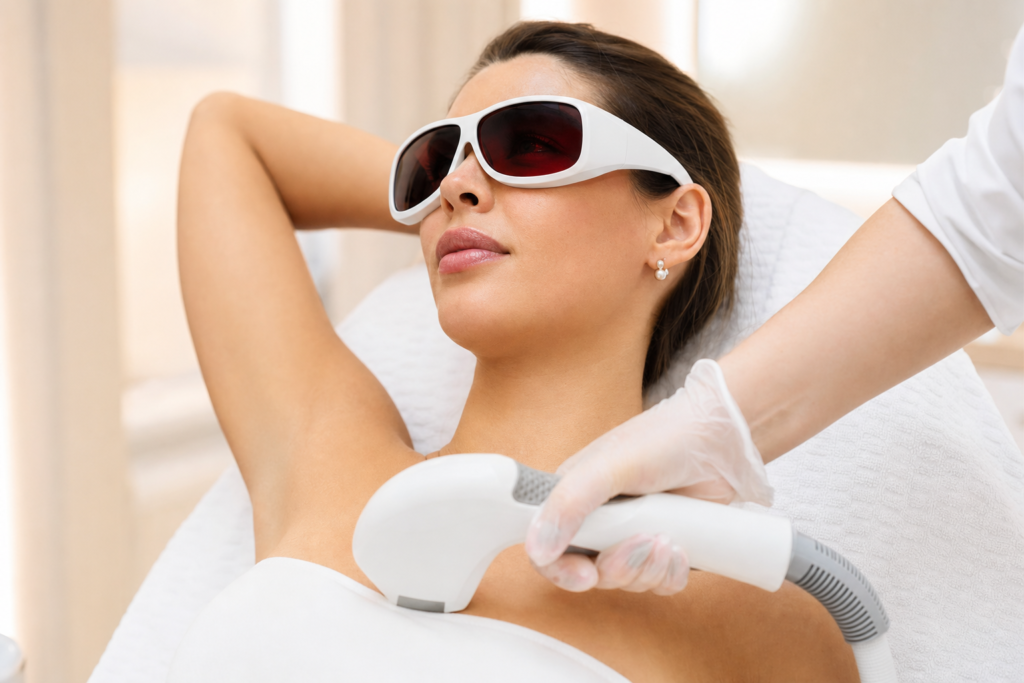
Eye safety is critical during facial treatments. Protective eyewear is mandatory, never optional. The laser can cause serious eye damage if it reaches your retina. Any clinic that doesn’t provide proper eye protection is cutting corners on fundamental safety protocols.
Who Should Avoid Laser Hair Removal
Pregnancy and breastfeeding are clear contraindications. While no studies show direct harm to the baby, there’s not enough research to confirm safety either. Most professionals recommend waiting until after you’ve finished nursing.
Active skin infections, open wounds, or active herpes outbreaks in the treatment area require postponing your session. Treating compromised skin increases infection risk and can worsen the underlying condition.
Certain medications increase photosensitivity, making your skin more vulnerable to burns. These include some antibiotics (tetracyclines), acne treatments (isotretinoin), and even herbal supplements like St. John’s Wort. Always disclose everything you’re taking during your consultation.
Recent sun exposure or fresh tans are temporary contraindications. Tanned skin has more melanin in the surface layers, which competes with the hair for laser energy. This increases burn risk and reduces effectiveness. Wait at least four weeks after sun exposure before booking a session.
Very light, gray, or white hair doesn’t respond well to laser because there’s not enough melanin to absorb the light energy. Red and blonde hair have less melanin too, making treatment less effective though not impossible with certain laser types.
AREZOO BEAUTÉ
Ready to enhance your natural beauty?
Book your consultation today and let our expert team help you choose the perfect treatment for your goals.
How to Choose a Safe Laser Hair Removal Provider
Start by verifying certification and training. In Quebec, laser hair removal can be performed by trained technicians under medical supervision. Ask about the operator’s specific laser training, not just general aesthetics certification.
Check the equipment. FDA-approved systems from reputable manufacturers like Candela, Lumenis, or Cynosure have proven safety records. Be wary of clinics that can’t or won’t tell you what system they use.
A thorough consultation is non-negotiable. The provider should ask about your medical history, medications, recent sun exposure, and previous hair removal methods. They should test a small area before proceeding with full treatment, especially for first-time clients or those with darker skin tones.
Read reviews, but look beyond star ratings. Pay attention to comments about safety protocols, consultation quality, and how the clinic handled any complications. A 4.9 rating built on hundreds of reviews, like Arezoo Beaute’s, reflects consistent attention to client care and safety over time.
Ask about their complication protocols. Every reputable clinic should have clear procedures for managing burns, infections, or unexpected reactions. If they claim complications never happen, they’re either inexperienced or dishonest.
Trust your gut during the consultation. If you feel rushed, dismissed, or pressured into treatment before your questions are answered, find another provider. Safety requires partnership between you and your technician, not just compliance with instructions.
What to Expect During a Safe Treatment Session
Your technician should cleanse the treatment area and possibly shave any remaining hair. The laser targets the hair shaft beneath the skin, so the surface needs to be clean and hair-free for optimal safety and results.
Protective eyewear goes on before the laser powers up. This isn’t optional. Even for body treatments away from your face, stray reflections can damage eyes. Proper studios like Arezoo Beaute at 2305 Rockland Rd provide medical-grade eye protection for every session.
You’ll feel a snapping sensation as the laser fires, often compared to a rubber band against your skin. Modern systems include cooling mechanisms that spray cold air or apply a chilled tip to your skin between pulses. This isn’t just for comfort. It’s a safety feature that protects your skin’s surface from heat damage.
Treatment time varies by area. Upper lip laser hair removal takes just a few minutes, while full legs laser hair removal might take 45 minutes to an hour. Rushing through a session to save time increases the risk of missed spots or uneven settings.
💡 Expert Tip
Schedule your sessions during cooler months when you’re less likely to be tan and can avoid sun exposure more easily. This reduces photosensitivity risks and improves your results by ensuring consistent melanin levels in your skin throughout your treatment series.
After treatment, your technician should apply a soothing gel and review aftercare instructions. If they don’t provide clear guidance on what to avoid and how to care for treated skin, ask before you leave. Proper aftercare is essential for preventing complications during the healing window.
Post-Treatment Care for Safety and Best Results
Avoid sun exposure for at least two weeks after each session. Treated skin is more sensitive to UV damage, which can cause burns or pigmentation changes. If you must be outdoors, use SPF 50 or higher and reapply every two hours.
Skip hot baths, saunas, steam rooms, and intense workouts for 24 to 48 hours. Heat and sweat can irritate treated follicles and increase inflammation. Lukewarm showers are fine, but keep water temperature moderate.
Don’t pick at or scratch treated areas, even if you experience mild crusting or shedding hair. This is normal as damaged hair pushes out of the follicle. Picking can introduce bacteria and increase scarring risk.
Moisturize gently with fragrance-free, non-comedogenic products. Aloe vera gel or basic moisturizers work well. Avoid products with retinoids, alpha hydroxy acids, or other active ingredients that might irritate healing skin.
Watch for signs of infection: increasing redness, warmth, swelling, or pus. These aren’t normal reactions. Contact your provider immediately if you notice any of these symptoms. Quick intervention prevents minor issues from becoming serious complications.
Space your sessions according to your technician’s recommendation, typically four to six weeks apart. Going too frequently doesn’t speed up results because hair grows in cycles. Patience during the full treatment series ensures the safest, most effective outcome.
Frequently Asked Questions
Does laser hair removal hurt?
Most people describe the sensation as a quick snap or sting, similar to a rubber band against skin. Pain tolerance varies by person and body area. Sensitive zones like the bikini line or chin may feel more intense than arms or legs. Modern lasers include cooling systems that significantly reduce discomfort. If pain feels severe or burning rather than stinging, tell your technician immediately so they can adjust settings.
How many sessions do I need for permanent results?
Most clients need six to eight sessions for significant reduction, though individual results vary. Laser only affects hair in the active growth phase, which is why multiple treatments spaced weeks apart are necessary. Hormonal changes, genetics, and treatment area all influence how many sessions you’ll need. Some areas like the face may require occasional maintenance sessions over time due to hormonal fluctuations.
Can laser hair removal cause cancer?
No credible evidence links laser hair removal to cancer. The lasers use non-ionizing radiation, which doesn’t damage DNA the way UV radiation or X-rays can. These wavelengths penetrate only to the hair follicle level, not deep enough to affect internal organs or systems. Decades of use and extensive research support the safety of FDA-approved laser systems when used properly.
Is it safe to get laser hair removal on my face?
Yes, facial laser hair removal is safe when performed by trained professionals using appropriate settings for delicate facial skin. Face laser hair removal requires extra precision and often different laser types than body treatments. Eye protection is absolutely mandatory. Areas very close to the eyes, like directly on eyelids, should never be treated with laser.
What happens if I get pregnant during my treatment series?
Stop treatments immediately and resume after you’ve finished breastfeeding. While there’s no evidence of harm to the baby, there’s also insufficient research to confirm safety during pregnancy and nursing. Your hormones will likely change hair growth patterns during pregnancy anyway, making treatments less predictable. Most providers recommend waiting until your hormones stabilize postpartum before continuing your series.
Laser hair removal is one of the safest cosmetic procedures available when you choose experienced providers who prioritize proper assessment, appropriate technology, and thorough aftercare guidance. The technology has matured significantly, and serious complications are rare in professional settings. Arezoo and her team at Arezoo Beaute combine PHI-certified precision with over nine years of experience serving Montreal clients, bringing the same meticulous approach to laser treatments that earned them recognition as leaders in permanent makeup and beauty services.
Your safety starts with the right consultation. Book your free consultation at Arezoo Beaute to discuss your skin type, hair removal goals, and any concerns with certified professionals who put your safety first. Call (514) 814-8007 or visit the studio at 2305 Rockland Rd, Unit 1590 in Montreal to start your journey toward smooth, hair-free skin with confidence.