
If you are considering laser hair removal, safety is likely your top concern. The good news: laser hair removal is one of the safest cosmetic procedures available when performed by trained professionals using approved equipment. This article walks you through the evidence-based answer, real risks and side effects, safety considerations for different skin types and body areas, and how to identify a qualified provider in Montreal.
You will learn what happens during treatment, how to prepare your skin, what to watch for afterward, and when laser hair removal might not be right for you. By the end, you will have the clarity needed to book your first session with confidence.
Quick Answer
Laser hair removal is safe for most people when performed by qualified technicians using Health Canada-approved devices. Temporary redness and mild discomfort are normal, while serious side effects are rare and typically result from improper technique or outdated equipment.
Is Laser Hair Removal Safe? The Evidence-Based Answer
Laser hair removal has been used for over two decades and is backed by extensive clinical research. Health Canada classifies laser hair removal devices as Class III medical devices, meaning they undergo rigorous safety testing before approval for commercial use.
The technology uses non-ionising radiation, which does not penetrate deep enough to affect internal organs or cause DNA damage. Unlike X-rays or ultraviolet exposure, the light energy from laser hair removal targets melanin in hair follicles at the surface level without harming surrounding tissue.
Multiple peer-reviewed studies confirm that laser hair removal is safe when performed correctly. A 2020 review of over 300 clinical trials found serious complications occurred in less than 1% of cases, typically when treatments were administered by untrained operators or on unsuitable skin types without proper assessment.
At Arezoo Beaute, we have performed thousands of laser hair removal treatments over 9 years with a 4.9 Google rating reflecting our commitment to safety protocols and client satisfaction. Our team follows strict hygiene standards and conducts thorough consultations before every first session.
Key Takeaways
- Verify your provider uses Health Canada-approved devices and trained technicians
- Expect temporary redness and sensitivity lasting 24 to 48 hours
- Avoid treatments during pregnancy or active skin infections for safety
- Choose clinics with consultation processes that assess your skin type
- Book patch tests if you have darker skin or sensitive areas
How Laser Hair Removal Works and Why It Is Considered Safe
Laser hair removal targets melanin, the pigment that gives hair its color. The laser emits a specific wavelength of light that is absorbed by melanin in the hair shaft and follicle. This light energy converts to heat, damaging the follicle enough to slow or stop future hair growth.
Because the laser is calibrated to target melanin, it bypasses the surrounding skin tissue when used properly. This selective targeting is what makes the treatment safe for most body areas when performed by trained professionals.
Three main laser types are used in professional settings: alexandrite lasers work best for lighter skin tones, diode lasers offer versatility across a wider range of skin types, and Nd:YAG lasers are safest for darker skin because they penetrate deeper without affecting surface melanin as much.
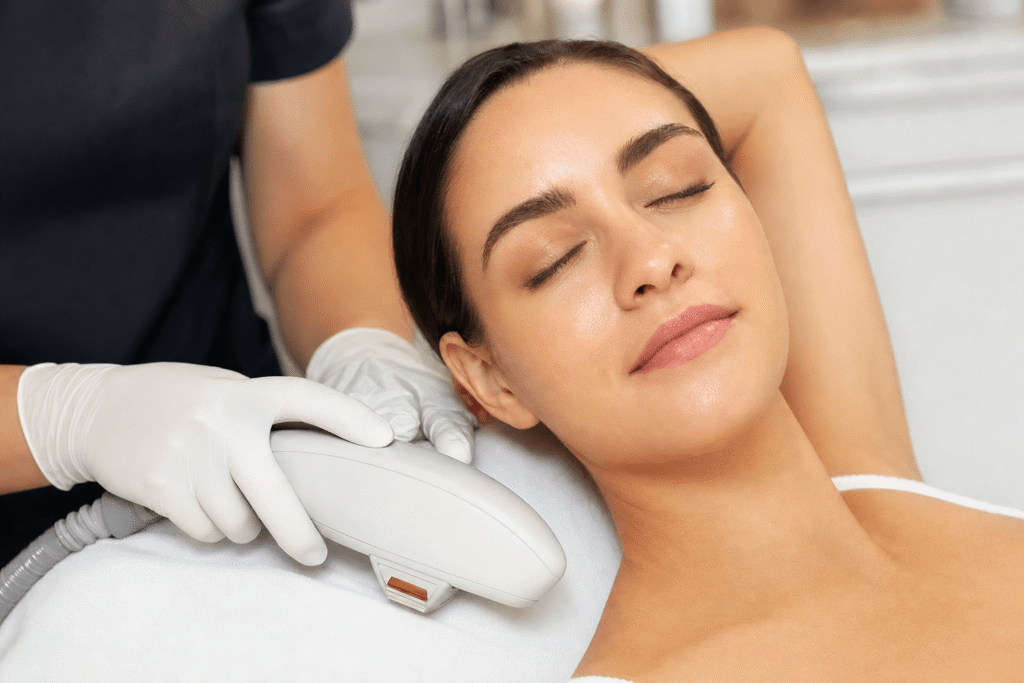
The treatment itself is non-invasive. No needles, no incisions, and no chemicals enter your body. Protective eyewear shields your eyes from the laser light during the session, and cooling devices or gels minimize discomfort and protect your skin surface.
At Arezoo Beaute in Montreal, we use calibrated laser systems suited to different skin tones and hair types. Our technicians adjust settings based on your individual assessment to maximize safety and effectiveness.
Expert Tip from Arezoo Beaute
Before your first laser session, avoid sun exposure and tanning products for at least two weeks. Tanned skin contains more melanin, which increases the risk of burns or pigmentation changes during treatment.
Potential Side Effects and Risks of Laser Hair Removal
Most side effects from laser hair removal are temporary and resolve within hours to a few days. Understanding what is normal versus what requires medical attention helps you approach treatment with realistic expectations.
Common Temporary Side Effects
Redness and mild swelling at the treatment site are the most common reactions. These typically appear immediately after your session and fade within 24 to 48 hours. Think of it as similar to a mild sunburn.
You might also experience temporary pigment changes. Lighter skin may darken slightly (hyperpigmentation) or lighten (hypopigmentation) for a few weeks. These changes are more common in darker skin types or after sun exposure before or after treatment.
Some clients report a tingling or prickling sensation for a day or two afterward. This is normal nerve response and does not indicate damage. Applying cool compresses and avoiding hot showers helps ease discomfort.
Folliculitis, or inflammation of hair follicles, can occur if bacteria enter the treated area. This presents as small red bumps and usually resolves with gentle cleansing and avoiding tight clothing over the area.
Rare Complications and How to Avoid Them
Burns are the most serious potential complication but are rare when proper laser settings are used. Burns typically result from incorrect wavelength selection for your skin type or applying too much energy during a session.
Scarring is extremely uncommon with modern laser technology. It usually only occurs if the treated area becomes infected or if you pick at blisters or scabs that form after improper treatment.
Eye injury is a risk if protective eyewear is not used during facial treatments. This is why reputable clinics provide proper eye shields for both client and technician during every session.
Paradoxical hair growth, where hair becomes thicker or darker after treatment, occurs in less than 1% of cases and is more common on the face, neck, and shoulders. The exact cause is unknown, but it is more frequent in people with hormonal imbalances or polycystic ovary syndrome.
Choosing a qualified provider is the single most important factor in avoiding complications. At Arezoo Beaute, located at 2305 Rockland Rd, Unit 1590 in Montreal, we offer free consultations to assess your skin type, medical history, and suitability for laser hair removal before scheduling treatment.
AREZOO BEAUTE
Ready to enhance your natural beauty?
Book your consultation today and let our expert team help you choose the perfect treatment for your goals.
Safety Considerations for Different Body Areas and Skin Types
Not all body areas carry the same level of risk. Sensitivity, skin thickness, and proximity to mucous membranes all affect how safely laser hair removal can be performed in different zones.
Sensitive Areas: Face, Bikini Line, and Areas with Tattoos or Moles
Facial treatments like upper lip laser hair removal and chin laser hair removal services require extra precision. The skin on your face is thinner and more visible, so even minor pigment changes are more noticeable. Lower energy settings and shorter pulse durations reduce risk.
The bikini area and Brazilian laser hair removal treatments are safe when performed by experienced technicians. The skin in these areas is more sensitive and prone to irritation, but proper cooling and technique minimize discomfort and side effects.
Never treat directly over tattoos. The laser will target the tattoo pigment, causing burns, scarring, and fading of the tattoo itself. Your technician should carefully avoid tattooed areas or skip them entirely.
Moles should be assessed before treatment. Small, flat moles may be safe to work around, but raised or irregular moles require evaluation by a dermatologist before laser hair removal. Treating over suspicious moles can mask changes that might indicate skin cancer.
Safety for Different Skin Tones and Hair Colors
Laser hair removal works best on people with high contrast between skin and hair color: light skin with dark hair. This is because the laser targets melanin in the hair while avoiding melanin in the skin.
Darker skin tones have more melanin in the epidermis, increasing the risk of burns or pigment changes if the wrong laser type or settings are used. Nd:YAG lasers are specifically designed to penetrate deeper and bypass surface melanin, making them the safest choice for darker skin.
People with blonde, red, or gray hair see limited results because these hair colors contain little to no melanin for the laser to target. Electrolysis remains a safer and more effective option for very light or white hair.
A reputable clinic will conduct a patch test before your first full session, especially if you have darker skin or are treating sensitive areas. This test helps determine safe settings for your unique skin type.
Expert Tip from Arezoo Beaute
If you have darker skin or are treating facial areas, ask about Nd:YAG laser options. This wavelength minimizes surface heating and reduces pigmentation risk while still effectively targeting the hair follicle.
How to Identify a Safe Laser Hair Removal Provider in Montreal
Not all laser hair removal clinics in Montreal operate with the same standards. Knowing what to look for protects you from substandard care and preventable complications.
First, verify that the clinic uses Health Canada-approved laser devices. Ask the clinic directly what type of laser they use and confirm it is a Class III or Class IV medical device approved for hair removal. Avoid clinics that use IPL (intense pulsed light) devices marketed as lasers, as these are less effective and carry different risk profiles.
Check the qualifications of the person performing your treatment. In Quebec, laser hair removal must be performed by licensed healthcare professionals or trained technicians working under medical supervision. Ask about training, certification, and years of experience.
Look for clinics that offer free consultations before treatment. A thorough consultation includes a skin type assessment, medical history review, discussion of medications or conditions that might affect treatment, and a patch test if needed.
Read client reviews with a critical eye. A 4.9 Google rating or higher with hundreds of reviews is a strong indicator of consistent quality and safety. Look for reviews that mention cleanliness, professionalism, and how the clinic handled any side effects.
Red flags include clinics that do not ask about your medical history, do not provide protective eyewear, pressure you to prepay for multiple sessions without a patch test, or offer prices significantly below market rate. Cheap laser hair removal often means outdated equipment or untrained staff.
At Arezoo Beaute, our 9 years of experience and 4.9 Google rating reflect our commitment to safe, effective treatments. We use sterile single-use tools, conduct thorough consultations, and adjust treatment plans based on your skin response session by session.
Safety and What to Expect
Understanding what happens during and after your laser hair removal treatment helps you recognize normal reactions and know when to seek help.
During Your Treatment
You will wear protective eyewear and lie comfortably while the technician applies the laser to the treatment area. Most people describe the sensation as a rubber band snapping against the skin or a warm prickling feeling. Sessions last anywhere from 10 minutes for small areas like the upper lip to 60 minutes for larger areas like full legs. To learn more about what the treatment feels like, read what laser hair removal feels like.
Your technician will adjust laser settings based on your skin response throughout the session. Communication is important: speak up if you experience sharp pain or intense heat, as these may indicate settings need adjustment. Cooling devices or topical numbing creams can be applied if you are concerned about discomfort.
Immediately After Treatment
Immediately after treatment, you will notice redness and possibly mild swelling. This is your skin’s normal inflammatory response and typically fades within a few hours to two days. Apply a soothing moisturizer or aloe vera gel to the treated area twice daily for the first few days.
Between 7 and 14 days post-treatment, treated hairs will begin shedding. They may appear to be growing, but they are actually being pushed out by the follicle. Gentle exfoliation or simply wiping with a washcloth helps remove these hairs.
After 4 to 6 weeks, you will notice significant hair reduction in the treated area. Hair that regrows will often be finer and lighter. This is when you schedule your next session to target follicles that have entered the active growth phase. Most people need 6 to 8 sessions spaced 4 to 6 weeks apart for optimal results.
Preparing for Safe Treatment and Post-Treatment Care
Proper preparation and aftercare are essential for maximizing safety and results.
How to Prepare for Your Session
Avoid sun exposure and tanning beds for at least two weeks before your session. Tanned skin increases your risk of burns and pigmentation changes. If you must be outdoors, use broad-spectrum SPF 30 or higher sunscreen daily.
Shave the treatment area 24 hours before your appointment. The laser targets the hair follicle beneath the skin, not the hair above it. Waxing or plucking removes the follicle entirely, leaving nothing for the laser to target, so avoid these methods for at least four weeks before treatment.
Stop using retinoids, glycolic acid, and other exfoliating skincare products three to five days before your session. These products thin the outer layer of skin, making it more sensitive to laser heat. Disclose all medications during your consultation, as some increase photosensitivity.
Post-Treatment Care
Avoid hot showers, saunas, steam rooms, and vigorous exercise for 24 to 48 hours. Heat increases inflammation and can worsen redness or swelling. Stick to lukewarm water and gentle cleansing with fragrance-free products.
Use broad-spectrum SPF 30 or higher sunscreen daily, even if the treated area is usually covered by clothing. Sun exposure on treated skin increases your risk of hyperpigmentation and burns.
Do not pick, scratch, or exfoliate the treated area. Hair will begin to shed naturally within 7 to 14 days as the damaged follicles release the hair shaft. This is normal and means the treatment is working.
Contact your provider immediately if you experience severe pain, blistering, oozing, signs of infection, or pigment changes that worsen beyond 48 hours. These symptoms require professional evaluation.
Laser Hair Removal Safety Compared to Other Hair Removal Methods
Understanding how laser hair removal compares to waxing, threading, and electrolysis helps you make an informed decision about which method best suits your safety concerns and lifestyle.
| Method | Pain Level | Infection Risk | Scarring Risk | Long-Term Safety |
|---|---|---|---|---|
| Laser Hair Removal | Mild to moderate | Very low when sterile | Extremely rare | Safe for repeated use |
| Waxing | Moderate to high | Moderate (ingrown hairs) | Low but possible | Can cause thinning skin |
| Threading | Moderate | Low | Very low | Safe but temporary |
| Electrolysis | High | Low when sterile | Possible with poor technique | Safe but time-intensive |
Waxing pulls hair from the root, which can cause ingrown hairs, folliculitis, and repeated trauma to the skin over time. The constant pulling can lead to sagging or thinning skin, especially on delicate areas like the face. Burns from hot wax are also a risk if temperature is not properly controlled.
Threading is safer than waxing for facial hair but still causes repeated trauma to hair follicles and can lead to irritation or breakouts in sensitive individuals. Results last only 2 to 4 weeks, requiring frequent maintenance.
Electrolysis permanently destroys individual hair follicles using electrical current. It is safe and effective for all hair colors and skin types but treats one follicle at a time, making it extremely time-consuming for large areas. Pain levels are generally higher than laser, and scarring can occur if performed incorrectly.
Laser hair removal offers a middle ground: less painful than electrolysis, faster than threading, and safer long-term than repeated waxing. When performed by qualified professionals, it carries minimal infection or scarring risk while providing lasting hair reduction after a full treatment course.
Special Safety Considerations: Pregnancy, Breastfeeding, and Hormonal Factors
Hormonal changes significantly affect hair growth patterns and treatment safety. Understanding these considerations helps you time your treatments appropriately.
Safety for Pregnant or Breastfeeding Women
Most clinics, including Arezoo Beaute, recommend waiting until after pregnancy and breastfeeding to undergo laser hair removal. While there is no direct evidence that laser energy harms a developing fetus or passes into breast milk, several safety concerns exist.
Pregnancy causes dramatic hormonal fluctuations that alter hair growth cycles. Elevated estrogen and androgen levels make hair grow faster, thicker, or in new areas during pregnancy. Treating hair during this period often produces poor results because hormones will change growth patterns again postpartum.
Pregnant skin is also more sensitive and prone to pigmentation changes. Melasma, or pregnancy mask, makes the skin more reactive to heat and light. Laser treatment during pregnancy increases the risk of burns, blistering, or permanent hyperpigmentation.
Additionally, the discomfort of laser treatment and the need to lie in certain positions for extended periods can be uncomfortable or unsafe during pregnancy, especially in the third trimester.
After delivery, wait until your hormone levels stabilize and you finish breastfeeding before resuming treatments. This typically takes 3 to 6 months postpartum. Your hair growth patterns will normalize, and treatment results will be more predictable and effective.
Hormonal Conditions and Their Impact
Polycystic ovary syndrome (PCOS), thyroid disorders, and other hormonal imbalances cause excess hair growth that may return even after successful laser treatment. Laser hair removal is still safe for people with these conditions, but managing the underlying hormonal issue improves long-term results.
If you have a diagnosed hormonal condition, discuss it during your consultation. You may need ongoing maintenance sessions every 6 to 12 months rather than permanent results. This does not mean treatment is unsafe, only that expectations should be adjusted based on your individual hormonal profile.
When Laser Hair Removal May Not Be Safe for You
Certain medical conditions and medications increase risk or reduce effectiveness. Always disclose your full medical history during consultation.
People taking photosensitizing medications like certain antibiotics, acne treatments, or blood pressure medications face higher burn risk. Isotretinoin (Accutane) requires a 6-month waiting period after discontinuation before laser treatment due to increased skin fragility.
Active skin infections, open wounds, or recent sunburn in the treatment area require postponing your session. Treating compromised skin increases infection risk and delays healing.
People with keloid scarring or a history of abnormal scarring should proceed cautiously. While laser hair removal does not typically cause scarring, any skin injury can potentially trigger keloid formation in susceptible individuals.
Autoimmune conditions like lupus or vitiligo require careful assessment. Some autoimmune disorders cause abnormal skin reactions to trauma, including laser energy. A dermatologist consultation is recommended before proceeding.
Frequently Asked Questions
Is laser hair removal safe for all skin types?
Laser hair removal is safe for most skin types when the correct laser type and settings are used. Nd:YAG lasers are specifically designed for darker skin tones, while alexandrite and diode lasers work best on lighter skin. A qualified technician will assess your skin type during consultation and adjust treatment parameters accordingly to minimize risk.
What are the most common side effects of laser hair removal?
The most common side effects are temporary redness, mild swelling, and a sunburn-like sensation that typically resolves within 24 to 48 hours. Some people experience temporary pigment changes or folliculitis. These effects are normal and usually fade within days to weeks. Serious complications like burns or scarring are rare when treatment is performed by qualified professionals.
How should I prepare for laser hair removal to ensure safety?
Avoid sun exposure and tanning for at least two weeks before treatment. Shave the area 24 hours before your session, but do not wax or pluck for at least four weeks prior. Stop using retinoids and exfoliating products three to five days beforehand. Disclose all medications and medical conditions during your consultation to reduce risk.
Is there any downtime after laser hair removal treatment?
Laser hair removal requires no downtime in most cases. You can return to normal activities immediately after treatment. Avoid hot showers, saunas, and vigorous exercise for 24 to 48 hours to reduce inflammation. Some redness or sensitivity is normal for the first day or two but does not prevent you from daily activities.
How long do laser hair removal results last?
Most people experience 70% to 90% permanent hair reduction after completing a full treatment series of 6 to 8 sessions. Results can last for years, though some fine regrowth may occur due to hormonal changes. Maintenance sessions every 6 to 12 months help sustain results long-term. To learn more, read how long laser hair removal results last.
Laser hair removal is one of the safest and most effective methods for long-term hair reduction when performed by qualified professionals using Health Canada-approved equipment. Understanding the risks, proper preparation, and realistic expectations ensures you approach treatment with confidence.
Ready to experience safe, effective laser hair removal in Montreal? Book your free consultation at Arezoo Beaute today. Our team at 2305 Rockland Rd, Unit 1590 will assess your skin type, answer your questions, and create a customized treatment plan tailored to your needs. Call us at (514) 814-8007 or visit our website to get started.