
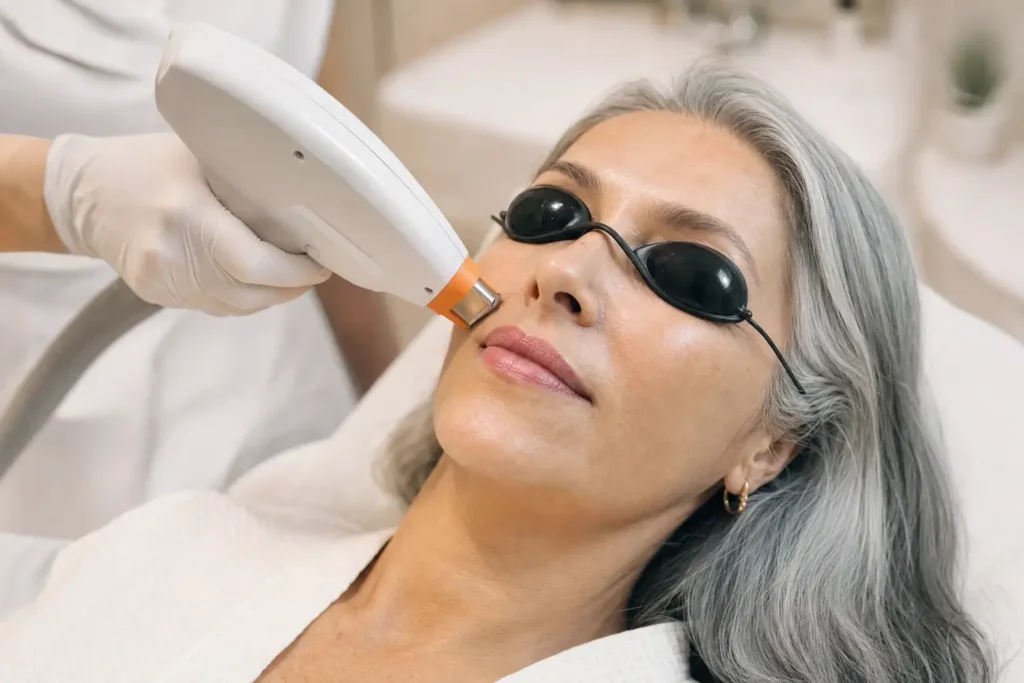
If you are considering laser hair removal but have noticed gray hairs appearing in your treatment area, you need to understand a fundamental limitation of laser technology. Laser hair removal does not work on gray hair because the treatment relies on melanin (pigment) in the hair shaft to absorb laser energy. Gray, white, and light blonde hairs lack sufficient melanin, making them invisible to laser systems.
This article explains the science behind why laser technology cannot treat gray hair, covers the only FDA-approved permanent solution that does work (electrolysis), compares costs and pain levels between methods, and guides you through what happens when hair turns gray during an active laser treatment plan.
Quick Answer
No, laser hair removal does not work on gray hair because gray hairs lack melanin, the pigment laser energy targets to destroy hair follicles. Electrolysis remains the only permanent hair removal method effective on all hair colors including gray, white, and blonde.
Does Laser Hair Removal Work on Gray Hair? The Direct Answer
The straightforward answer is no. Laser hair removal cannot effectively treat gray hair, regardless of which laser type you use or how many sessions you complete.
Every laser hair removal system operates on the same fundamental principle: the laser emits light energy that is absorbed by melanin in the hair shaft. This energy converts to heat, travels down to the hair follicle, and destroys the cells responsible for hair growth.
Gray hair develops when melanocytes in the hair follicle stop producing melanin. Without melanin to absorb the laser energy, the light simply passes through the hair without generating enough heat to damage the follicle.
This same limitation applies to white hair and very light blonde hair. Blonde hair presents similar challenges due to lower melanin concentration, though results vary based on how dark the blonde shade is.
If you have a mix of dark and gray hairs in your treatment area, laser can still reduce the dark hairs while leaving the gray ones untouched. Many clients choose to proceed with laser for the pigmented hairs and then switch to electrolysis for the remaining gray growth.
Key Takeaways
- Understand laser hair removal cannot treat gray, white, or very blonde hair
- Recognize electrolysis as the only permanent solution for all hair colors
- Expect higher per-session costs but permanent results with electrolysis treatments
- Plan for combination approaches when treating areas with mixed hair colors
- Book professional consultation to assess your specific hair color and options
Why Laser Hair Removal Doesn’t Work on Gray Hair: The Science of Melanin
To understand why laser treatment fails on gray hair, you need to know how the technology identifies its target. Laser hair removal uses light to create heat that destroys tissue.
The laser device emits a specific wavelength of light calibrated to be absorbed by melanin while passing relatively harmlessly through the surrounding skin. When melanin in the hair shaft absorbs this light energy, it heats up rapidly, reaching temperatures high enough to damage the follicle’s stem cells and blood supply.
How Laser Technology Targets Pigment in the Hair Follicle
Different laser wavelengths penetrate to different depths and have varying affinity for melanin. Alexandrite lasers (755nm) work best on lighter skin with dark hair. Diode lasers (800-810nm) offer versatility across skin types. Nd:YAG lasers (1064nm) safely treat darker skin tones.
Regardless of wavelength, all these systems require contrast: dark hair against lighter skin provides the ideal scenario. The laser’s energy seeks out the highest concentration of melanin, which should be in the hair follicle, not the surrounding skin.
Gray hair disrupts this entire mechanism. With minimal to no melanin present, there is nothing for the laser to target. The light energy either scatters or is absorbed by surrounding tissue, but never concentrates enough heat in the follicle to cause permanent damage.
Why Blonde and White Hair Also Resist Laser Treatment
The same melanin dependency explains why very light blonde and white hair cannot be effectively treated with laser technology. These hair colors contain either very low melanin levels (blonde) or complete melanin absence (white).
Light blonde hair occasionally responds to laser if it contains enough pheomelanin, but results are unpredictable and typically require significantly more sessions than dark hair. White hair, like gray hair, lacks melanin entirely and will never respond to laser energy.
Expert Tip from Arezoo Beaute
When clients show us areas with mixed gray and dark hair, we recommend starting with professional facial waxing to maintain results while evaluating whether the ratio of dark to gray hair justifies laser investment for the pigmented portion.
Electrolysis: The Gold Standard Permanent Solution for Gray Hair
If you want permanent hair removal for gray hair, electrolysis is your only FDA-approved option. Unlike laser systems that rely on pigment, electrolysis destroys each hair follicle individually using electrical current, making it effective on all hair colors, skin tones, and hair textures.
The method has been used for over 140 years and remains the only hair removal technique the FDA recognizes as truly permanent. Laser hair removal is classified as permanent hair reduction.
How Electrolysis Works on All Hair Colors
During electrolysis, a trained technician inserts a very fine probe into each hair follicle alongside the hair shaft. A small amount of electrical current flows through the probe, creating a chemical reaction or generating heat that destroys the follicle’s growth cells.
Three types of electrolysis exist: galvanic (uses chemical reaction), thermolysis (uses heat), and blend (combines both). Most modern practitioners use thermolysis or blend methods because they work faster while maintaining effectiveness.
Because electrolysis treats each follicle mechanically rather than relying on light absorption, hair color is completely irrelevant. Gray, white, blonde, red, brown, and black hairs all respond equally well.
Treatment Expectations and Session Requirements
Electrolysis requires patience and commitment. Unlike laser, which can treat large areas quickly, electrolysis addresses one follicle at a time. Small areas like the upper lip or chin typically require 15-30 minute sessions. Larger areas like the legs would take many hours across numerous appointments.
Most clients need 15-30 sessions total for complete clearance, scheduled every 2-4 weeks initially, then spaced further apart as hair growth diminishes. The exact number varies based on hormonal factors, hair density, and treatment area size.
Results are permanent for successfully treated follicles. Once a follicle is properly destroyed, that specific hair will not regrow.
AREZOO BEAUTE
Ready to enhance your natural beauty?
Book your consultation today and let our expert team help you choose the perfect treatment for your goals.
Cost Comparison: Laser vs. Electrolysis for Gray Hair Removal
Understanding the financial investment helps you plan your hair removal budget realistically. While laser hair removal is not an option for gray hair, comparing costs provides context for evaluating electrolysis and temporary alternatives.
Session Pricing and Total Treatment Investment
Laser hair removal in Montreal typically costs between $100-$400 per session depending on treatment area size. Most clients need 6-8 sessions for optimal results on dark hair.
Electrolysis pricing is typically calculated by time rather than body area. In Montreal, expect to pay $60-$120 per hour. Some clinics offer 15-minute ($20-$30) or 30-minute ($40-$60) minimum sessions for small areas.
Detailed laser pricing in Montreal shows the per-session investment, but remember these numbers only apply if you have sufficient melanin in your hair.
| Treatment Area | Laser (Per Session) | Electrolysis (Per Hour) | Total Sessions Needed |
|---|---|---|---|
| Upper Lip | $100-$150 | $60-$90 (15-30 min) | Laser: 6-8 | Electrolysis: 15-25 |
| Chin | $100-$175 | $60-$120 (30-60 min) | Laser: 6-8 | Electrolysis: 15-30 |
| Underarms | $150-$250 | $120-$180 (60-90 min) | Laser: 6-8 | Electrolysis: 20-35 |
| Bikini Line | $200-$300 | $120-$240 (60-120 min) | Laser: 6-8 | Electrolysis: 20-40 |
While electrolysis often costs more overall, it represents the only path to permanent results for gray hair. Some clients choose temporary methods like waxing between electrolysis sessions. Professional chin waxing costs $20-$30 per session and lasts 3-6 weeks.
Pain Level Comparison and Numbing Options
Most clients describe laser hair removal as feeling like a rubber band snapping against the skin. Electrolysis sensation varies based on which method your technician uses. Thermolysis creates a quick heat sensation, often described as a slight sting or pinch.
Facial areas with thinner skin (upper lip, chin) tend to be more sensitive for both treatments. Body areas with thicker skin typically generate less discomfort.
Numbing options for electrolysis include topical anesthetic creams applied 30-60 minutes before treatment. Some technicians offer ice packs before and after treatment to minimize discomfort.
Expert Tip from Arezoo Beaute
Clients with low pain tolerance often schedule shorter, more frequent electrolysis sessions rather than longer appointments. Fifteen-minute sessions twice weekly can feel more manageable than hour-long monthly treatments while maintaining steady progress toward permanent gray hair removal.
What Happens When Hair Turns Gray During Laser Treatment
Many clients begin laser hair removal with predominantly dark hair, then notice gray hairs appearing in the treatment area as sessions progress. This common scenario requires adjusting your treatment plan to match your changing hair color.
When gray hairs emerge during an active laser series, those specific follicles will stop responding to treatment. You will notice that dark hairs continue to thin and reduce while gray hairs remain at full density.
Some clients choose to complete their planned laser sessions to maximize reduction of remaining pigmented hairs before transitioning to electrolysis. Others prefer to pause laser treatment and switch entirely to electrolysis, especially if the gray hair percentage has increased substantially.
Your treatment provider should reassess your hair color ratio every few sessions and discuss whether continuing laser remains cost-effective. Honest practitioners will recommend transitioning to electrolysis when it becomes the better investment.
Combination Treatment Strategies for Mixed Hair Colors
When your treatment area contains both pigmented and gray hairs, you have several strategic options that maximize results while managing costs effectively.
The most common combination approach involves using laser hair removal to reduce dark hairs while simultaneously or sequentially using electrolysis on gray hairs. This strategy leverages each method’s strengths: laser’s speed and efficiency for pigmented growth, and electrolysis’s color-independent effectiveness for gray strands.
Sequential treatment starts with completing laser sessions to eliminate as many dark hairs as possible, then transitions to electrolysis for remaining gray growth. Simultaneous treatment combines both methods during the same time period.
Some clients use temporary hair removal methods like waxing to maintain smooth skin while completing a full electrolysis series. Professional waxing removes both dark and gray hairs equally well and lasts several weeks.
Choosing the Right Hair Removal Method: Consultation and Next Steps
Selecting your hair removal approach starts with honest professional assessment of your hair color, skin tone, treatment area, budget, and timeline expectations.
A thorough consultation should include close examination of your hair in good lighting to determine the actual color distribution. Your practitioner should discuss your complete medical history, including hormonal factors, medications, and any conditions that affect hair growth.
Be prepared to discuss your pain tolerance honestly. If you have low pain threshold, starting with a small test area for electrolysis helps you gauge whether you can tolerate the sensation for larger zones.
Ask about practitioner credentials and experience specifically with electrolysis on your hair type and treatment area. Request before-and-after photos of previous clients with similar hair color and treatment areas.
At Arezoo Beaute in Montreal, we provide complimentary consultations that assess your specific situation without pressure to commit immediately. Located at 2305 Rockland Rd, Unit 1590, our experienced team evaluates your hair color honestly and recommends the most effective approach, whether that involves our professional waxing services for temporary management or referrals to trusted electrolysis specialists for permanent gray hair removal.
Frequently Asked Questions
Does laser hair removal work on gray hair?
No, laser hair removal does not work on gray hair. Laser technology requires melanin in the hair shaft to absorb light energy and destroy the follicle. Gray hair lacks melanin, making it invisible to all laser systems.
Can the newest laser machines treat gray or white hair?
No, even the most advanced laser machines cannot effectively treat gray or white hair. All laser systems still rely on melanin absorption to function. No technological advancement can overcome the absence of pigment in gray and white hair.
Is electrolysis better than laser for gray hair removal?
Electrolysis is not just better, it is the only permanent option for gray hair removal. While laser hair removal fails completely on gray hair, electrolysis destroys individual follicles using electrical current regardless of hair color.
Can you dye gray hairs darker to make laser hair removal effective?
No, dyeing gray hair darker does not make laser hair removal work. Hair dye only colors the hair shaft above the skin surface, while laser targets melanin deep in the follicle beneath the skin.
What are my permanent hair removal options if I have gray hair?
Electrolysis is your only permanent hair removal option for gray hair. This FDA-approved method destroys individual follicles using electrical current and works on all hair colors. Treatment requires multiple sessions over several months.
Making the Right Choice for Your Gray Hair Removal
Gray hair changes your permanent hair removal options dramatically. Laser technology simply cannot target follicles without melanin, making electrolysis your only path to permanent results. While the investment requires more time and often higher cost than laser for dark hair, electrolysis delivers what laser cannot: complete permanent removal regardless of hair color.
Whether you are just noticing your first gray hairs or managing an area that has fully transitioned to gray and white, professional assessment helps you choose the most effective approach. Arezoo Beaute’s experienced team in Montreal provides honest guidance on hair removal options tailored to your hair color, treatment goals, and budget.
Ready to explore your best hair removal options? Schedule your free consultation at our Rockland location or call (514) 814-8007 to discuss your specific hair color and removal goals with our knowledgeable team.