
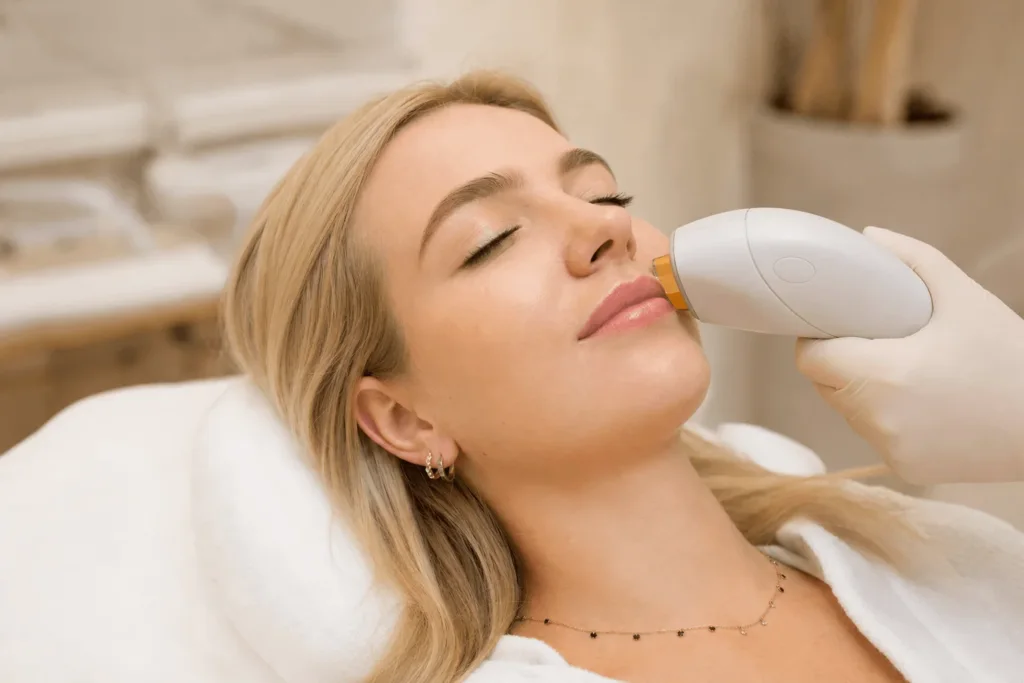
If you have blonde hair and you are researching laser hair removal, you need a straightforward answer before investing hundreds or thousands of dollars in treatments that may not deliver results. Does laser hair removal work on blonde hair? The short answer is that it typically does not work well for most blonde hair types, but understanding the nuances can save you time, money, and frustration.
This article explains exactly why laser technology struggles with blonde hair, which specific shades might still respond, what alternatives actually work, and how to determine your candidacy through proper consultation and patch testing. You will also learn about cost comparisons, recent technology advances, and realistic expectations based on professional experience.
At Arezoo Beaute in Montreal, clients with blonde hair often come to us hoping for permanent hair reduction, and we believe in providing honest guidance rather than overselling services that may not deliver the results you deserve.
Quick Answer
Laser hair removal generally does not work effectively on blonde hair because the light targets melanin, which blonde hair lacks. Darker blonde shades may see minimal results, but platinum and light blonde typically require alternative methods like electrolysis or waxing for successful hair removal.
Does Laser Hair Removal Work on Blonde Hair? The Honest Answer
The reality is that standard laser hair removal systems are not designed to effectively treat blonde hair. The technology relies on sufficient melanin concentration in the hair shaft to absorb laser energy and transfer heat to the follicle.
Blonde hair contains significantly less eumelanin, the dark pigment that absorbs laser light, compared to brown or black hair. Instead, blonde hair has higher concentrations of pheomelanin, a lighter pigment that does not interact well with most laser wavelengths.
This fundamental biological limitation means that even the most advanced laser systems struggle to generate enough heat in blonde hair follicles to achieve permanent reduction. The laser light simply passes through the hair without sufficient absorption.
However, not all blonde hair is created equal. The spectrum ranges from platinum and light blonde to dirty blonde and strawberry blonde, with varying melanin levels that can influence treatment outcomes.
At our Montreal location, we conduct thorough consultations to assess hair color, skin tone, and contrast ratio before recommending any treatment path. Many clients appreciate this honest approach rather than spending money on sessions that yield minimal results.
The good news is that effective alternatives exist, including electrolysis for permanent removal and professional waxing services for temporary hair reduction. Understanding your options helps you make an informed decision based on your specific hair characteristics and goals.
Key Takeaways
- Understand that standard laser technology targets melanin blonde hair lacks.
- Expect minimal to no results with platinum or light blonde hair.
- Consider electrolysis as the proven permanent alternative for blonde hair.
- Request patch testing before committing to full laser treatment packages.
- Explore professional waxing for reliable temporary blonde hair removal results.
How Laser Hair Removal Technology Targets Melanin
Laser hair removal operates on the principle of selective photothermolysis. The laser emits a specific wavelength of light that is absorbed by melanin in the hair shaft.
When melanin absorbs this light energy, it converts to heat. This heat travels down the hair shaft to the follicle, damaging the cells responsible for hair growth without harming surrounding skin tissue.
The three most common laser types used in hair removal are Alexandrite, Diode, and Nd:YAG lasers. Each operates at different wavelengths, but all rely on melanin as the primary chromophore, the target that absorbs the light.
The critical factor is contrast. The laser needs to distinguish between the melanin in your hair and the melanin in your skin. High contrast means better results and safer treatment.
Blonde hair presents a fundamental challenge because it contains minimal eumelanin. The laser light has little pigment to target, resulting in insufficient heat generation to damage the follicle effectively.
This is not a flaw in the technology but rather a limitation based on the biological properties of blonde hair. No amount of increased laser power can safely compensate for absent melanin without risking skin damage.
Expert Tip from Arezoo Beaute
During consultations, we examine hair and skin under proper lighting to assess pigment concentration. If your body hair appears significantly lighter than your eyebrows or scalp hair, laser results will likely disappoint. Professional assessment prevents wasted investment.
The Blonde Hair Spectrum: Which Shades May Still Respond
Not all blonde hair falls into the same category. Understanding where your specific shade sits on the spectrum helps set realistic expectations.
The blonde spectrum ranges from platinum and ash blonde at the lightest end to dark blonde and strawberry blonde at the darker end. Pigment concentration varies significantly across this range.
Darker Blonde Shades: Dirty Blonde and Strawberry Blonde
Dirty blonde hair, which has brown or ash undertones, contains more eumelanin than lighter blonde shades. Some clients with this hair color may see partial results, particularly if the hair is coarse.
Strawberry blonde hair, with its reddish tones, contains a mix of pheomelanin and some eumelanin. The results remain unpredictable, but darker strawberry blonde may respond minimally to laser treatment.
Even in these cases, expect significantly longer treatment timelines and less dramatic reduction compared to brown or black hair. You might achieve 30-50% reduction rather than the 80-90% possible with dark hair.
Platinum and Light Blonde: Why Laser Is Ineffective
Platinum blonde, light blonde, and ash blonde hair contain minimal eumelanin. Laser treatment on these shades typically produces no meaningful results.
The hair is simply too light for the laser to differentiate from the surrounding skin. Attempting treatment risks skin damage without follicle destruction.
Bleached or chemically lightened hair falls into this category as well. The bleaching process removes melanin from the hair shaft, making it an unsuitable target for laser energy.
No reputable provider should recommend laser treatment for platinum or very light blonde hair. If someone promises results, consider it a red flag and seek a second opinion.
Expert Tip from Arezoo Beaute
We often recommend patch testing on a small area before purchasing package deals. Wait three to four weeks after the test to evaluate hair shedding and regrowth. This waiting period reveals whether your blonde hair has enough pigment to respond meaningfully.
Why Skin Tone and Hair Contrast Matter for Blonde Candidates
The relationship between your skin tone and hair color creates what professionals call the contrast ratio. This ratio determines both treatment safety and effectiveness.
For blonde hair candidates, skin tone plays a critical role. Fair skin with blonde hair presents minimal contrast. The laser cannot easily distinguish between the melanin in your skin and the limited melanin in your hair.
This low contrast increases the risk of skin damage while decreasing treatment effectiveness. The laser may inadvertently target skin melanin instead of hair follicles, potentially causing burns, hyperpigmentation, or scarring.
Clients with tanned skin face additional complications. Tanning increases skin melanin, further reducing the contrast ratio. Most providers require you to avoid sun exposure and tanning products for several weeks before treatment.
Medium to olive skin tones with blonde hair create an even more challenging scenario. The skin contains enough melanin to compete for laser energy, while the hair contains too little to effectively absorb it.
In contrast, dark hair on fair skin represents the ideal scenario. Maximum contrast allows the laser to target hair follicles precisely while minimizing skin exposure.
Recent Laser Technology Advances for Light Hair Colors
The hair removal industry continues researching solutions for light hair, but significant limitations remain even with newer technologies.
Some manufacturers have introduced combination devices that use radiofrequency energy alongside laser light. The theory suggests RF energy can heat hair follicles through pathways other than melanin absorption. Early results show modest improvements for some light hair candidates, but these systems still work best when at least some melanin is present.
Another approach involves using longer wavelengths or different pulse durations to penetrate deeper while generating broader heat patterns. These modifications show limited success with truly blonde hair because the fundamental challenge remains biological rather than technological.
Some facilities promote IPL (Intense Pulsed Light) as effective for blonde hair. However, IPL uses broad-spectrum light rather than focused laser wavelengths, making it even less effective for low-melanin hair than traditional lasers.
The most promising research explores follicle-targeting methods that do not rely on melanin at all. These technologies remain in development stages and are not yet commercially available for routine treatments.
Be cautious of marketing claims promising results for all hair colors. Ask providers to explain the specific mechanism that allows their device to work without melanin, and request before-and-after photos of blonde hair clients specifically.
Electrolysis: The Most Effective Alternative for Blonde Hair
If you have blonde hair and want permanent hair removal, electrolysis remains the gold standard. Unlike laser, electrolysis does not rely on melanin.
Electrolysis works by inserting a fine probe into each individual hair follicle. A small electrical current destroys the follicle’s growth center, preventing future hair production.
This method treats each hair independently, making it effective regardless of hair color, skin tone, or hair texture. Blonde, gray, white, and red hair all respond equally well to electrolysis.
The main drawback is time. Electrolysis treats one hair at a time, making it significantly slower than laser, which can treat large areas simultaneously. A session that covers both legs with laser might take 30 minutes, while electrolysis could require months of regular appointments.
Cost reflects this time investment. While individual electrolysis sessions may cost less than laser sessions, the total investment for completing a large area often exceeds laser treatment costs for ideal candidates.
However, for blonde hair candidates, comparing costs against ineffective laser treatments changes the equation. Spending less on a method that works makes more financial sense than spending anything on a method that fails.
Electrolysis works best for smaller areas like the upper lip, chin, eyebrows, or bikini line. These areas have manageable hair counts that make treatment practical.
For larger areas like full legs or backs, the time and cost commitment may feel overwhelming. In these cases, many clients choose professional waxing as a practical solution for blonde hair removal. Our experienced technicians provide smooth, consistent results that last three to six weeks between appointments.
At Arezoo Beaute, we help clients weigh these trade-offs honestly during consultations. Some choose electrolysis for facial hair while using our facial waxing services for larger body areas, creating a hybrid approach that balances effectiveness, time, and budget.
AREZOO BEAUTE
Ready to enhance your natural beauty?
Book your consultation today and let our expert team help you choose the perfect treatment for your goals.
Professional Consultation and Patch Testing for Blonde Hair
For blonde hair candidates, professional consultation and patch testing provide essential data before making treatment decisions. This critical step determines whether laser can work for your specific hair characteristics or whether alternatives will serve you better.
During your consultation, the provider should examine your hair under proper lighting to assess pigment levels. They should evaluate the contrast ratio between your hair and skin tone, and discuss realistic success rates based on your specific coloring. A reputable provider will honestly tell you if laser is unlikely to work rather than taking your money for ineffective treatments.
A proper patch test should treat at least a few square inches in the area you plan to have done. Testing a different body area may yield different results due to varying hair characteristics. The provider should use the settings they would use for your full treatments to give accurate information about expected outcomes.
After the patch test, wait three to four weeks before evaluating results. Initial shedding happens within two weeks for responsive hair, but regrowth patterns become clear only after a full growth cycle. This waiting period is essential for accurate assessment.
Evaluate what percentage of treated hairs actually shed and whether regrowth appears finer or sparser. If you see minimal change, full treatments will likely disappoint. Some clients with borderline blonde shades see enough reduction to justify continuing, while others confirm that alternative methods make more sense for their coloring.
The patch test investment typically costs between $50 and $150, depending on the treatment area size. Many providers apply this cost toward your treatment package if you decide to proceed. This small upfront investment prevents wasting hundreds or thousands on ineffective full treatments.
Questions to Ask During Your Blonde Hair Consultation
Walking into a consultation prepared with specific questions helps you evaluate provider expertise and honesty. The answers reveal whether they prioritize your results or their sales targets.
Here are essential questions every blonde hair candidate should ask:
- What success rate do you see with clients who have hair similar to mine in color and texture?
- Can you show me before-and-after photos of blonde hair clients specifically, not just dark hair results?
- What is your refund or satisfaction policy if treatments do not produce meaningful results after patch testing?
- What specific laser device do you use, and why do you believe it will work on my low-melanin hair?
- What percentage of hair reduction should I realistically expect given my hair color and skin tone?
- Do you offer patch testing, what does it cost, and does that cost apply toward future treatments?
- What alternatives do you recommend if laser proves ineffective for my hair type?
- How many sessions would you estimate I need, and what happens if I see no results after half the recommended sessions?
- Are there body areas where my blonde hair might respond better than others?
- What training do you have specifically with challenging hair colors like blonde?
If responses feel evasive, overly sales-focused, or dismissive of your concerns, consider consulting elsewhere. Reputable providers welcome detailed questions and provide honest, science-based answers. They will acknowledge the limitations of laser technology for blonde hair rather than making unrealistic promises.
Treatment Area Recommendations: Where Laser May Work vs Where to Avoid
Not all body areas present equal challenges for blonde hair candidates. Understanding which areas might still be suitable for laser versus which require alternative methods helps you plan strategically and allocate your budget effectively.
Best Areas to Attempt Laser (With Caution)
Facial hair, particularly upper lip and chin, sometimes shows more pigment than body hair due to hormonal influences. If these hairs trend toward brown or dark blonde, laser may produce modest results worth pursuing. Underarm hair occasionally contains more pigment as well, making this area worth evaluating through patch testing.
These smaller areas also limit your financial risk. If patch testing shows minimal response, you have not invested thousands in ineffective full-body treatments.
Areas to Avoid Laser Entirely
Leg and arm hair in blonde candidates typically remains too light for effective laser treatment. The large surface area also makes electrolysis impractical for most budgets, making regular waxing the most practical solution. Our leg waxing services provide smooth results lasting several weeks.
Fine blonde vellus hair on arms should avoid laser entirely due to risk of paradoxical hair growth stimulation. This uncommon but frustrating side effect can cause finer hairs to become thicker and darker after laser exposure.
Bikini and Brazilian areas rarely respond well unless your hair in these regions is noticeably darker than elsewhere. Many clients choose our Brazilian waxing services for reliable, smooth results lasting several weeks without the uncertainty of laser on blonde hair.
Back and chest hair in blonde candidates presents the same challenges as legs. The combination of large area and light pigment makes laser ineffective and electrolysis cost-prohibitive for most budgets.
The key is matching the method to the specific hair characteristics in each area rather than assuming one approach fits all. This personalized strategy maximizes results while controlling costs.
Cost Comparison: Laser Attempts vs Electrolysis for Blonde Hair
Understanding the financial implications of different approaches helps you make cost-effective decisions aligned with realistic outcomes. The cheapest option means nothing if it delivers no results.
Laser hair removal packages for small areas like the upper lip typically range from $300 to $600 for six to eight sessions. For blonde hair candidates who see minimal results, this represents money spent with little return. If you achieve only 20% reduction after the full package, you have paid $300-$600 for results that disappear within months as remaining follicles continue normal growth cycles.
Electrolysis for the same upper lip area might cost $50-$100 per session, with 15-25 sessions needed for complete clearance depending on hair density. Total investment ranges from $750 to $2,500, but the results are permanent and predictable. Every session produces visible, lasting reduction regardless of your hair color.
For larger areas like full legs, laser packages typically cost $1,500 to $3,500 for six to eight sessions. Blonde hair candidates rarely achieve satisfactory results at this price point. You might spend $2,000 and see only 15-20% reduction, leaving you frustrated with visible hair remaining.
Full leg electrolysis could require 50-100+ hours of treatment time at $75-$150 per hour, totaling $3,750 to $15,000 or more due to the extensive time investment. This makes electrolysis impractical for many budgets on large body areas.
Professional waxing offers a middle option. Regular leg waxing might cost $60-$100 per session, with maintenance every four to six weeks. Annual costs range from $520 to $1,300 for consistent smoothness throughout the year. Over a five-year period, you would invest $2,600 to $6,500, but results are reliable and immediate after every appointment.
| Method | Best For Blonde Hair | Small Area Cost | Large Area Cost | Time Investment |
|---|---|---|---|---|
| Laser Hair Removal | Darker blonde only | $300-$600 | $1,500-$3,500 | 6-8 sessions |
| Electrolysis | All blonde shades | $750-$2,500 | $3,750-$15,000+ | 15-100+ sessions |
| Professional Waxing | All blonde shades | $25-$50/visit | $60-$100/visit | Every 4-6 weeks |
Clients often find that combining methods delivers the best value. Electrolysis for small, visible areas like the face provides permanent freedom from unwanted hair, while waxing for larger body areas creates a practical, effective routine that fits most budgets.
Making the Right Choice for Your Hair Removal Goals
Understanding the limitations of laser hair removal for blonde hair empowers you to make informed decisions aligned with realistic outcomes. The technology works brilliantly for ideal candidates with dark hair and light skin, but it simply cannot overcome the biological reality of low melanin content in blonde hair.
Rather than viewing this as a limitation, consider it an opportunity to invest your time and money in methods proven to work for your specific hair characteristics. Electrolysis delivers permanent results regardless of hair color. Professional waxing provides smooth, reliable temporary removal. Both options serve blonde hair candidates far better than disappointing laser attempts.
The most important step is proper professional assessment. Generic online advice cannot evaluate your individual hair pigment, skin tone, and contrast ratio. Only an in-person consultation with examination under proper lighting reveals your true candidacy and guides appropriate treatment planning.
At Arezoo Beaute, our team brings over nine years of experience helping Montreal clients navigate hair removal options honestly. We would rather recommend effective alternatives than sell you treatments unlikely to deliver the results you deserve. Our 4.9 Google rating reflects our commitment to client satisfaction through honest guidance and proven techniques.
Whether you choose electrolysis for small areas, waxing for larger regions, or a combination approach, you deserve professional service that prioritizes your goals and respects your investment. We invite you to schedule a complimentary consultation at our Rockland location to discuss your specific needs, evaluate your hair characteristics, and create a personalized hair removal plan that actually works for your blonde hair. Call us at (514) 814-8007 or book online to take the first step toward smooth, confident skin with methods designed for your success.
Frequently Asked Questions
Does laser hair removal work on blonde hair?
No, laser hair removal typically does not work effectively on blonde hair because it targets melanin, which blonde hair lacks. Platinum and light blonde show minimal to no results, while darker blonde may achieve 30-50% reduction at best. Electrolysis or professional waxing deliver better outcomes for blonde candidates.
Why doesn’t laser hair removal work as well on blonde hair?
Laser relies on melanin to absorb light energy and convert it to heat that damages follicles. Blonde hair contains minimal eumelanin, so laser energy passes through without generating sufficient heat. Without the pigment target, the technology cannot effectively destroy growth cells.
What is the best hair removal method for blonde hair?
Electrolysis is the most effective permanent method for blonde hair because it treats follicles individually using electrical current rather than targeting melanin. For larger areas, professional waxing provides reliable temporary removal lasting three to six weeks at a more practical cost.
Can I dye my blonde hair darker to make laser treatment more effective?
No, hair dye only colors the hair shaft above skin surface, not the follicle that laser targets. The laser must reach natural melanin in the follicle itself to destroy growth cells. Dyed hair will not improve treatment effectiveness or results.
Are there new laser technologies that work on blonde hair?
Some newer devices combine radiofrequency with laser light, showing modest improvements for lighter hair, but they still require some melanin present. These represent incremental progress rather than breakthrough solutions. The biological challenge of targeting follicles without melanin remains largely unsolved.