
If you’re tired of shaving, waxing, or plucking unwanted hair, you’ve probably wondered: is laser hair removal permanent? The short answer is that laser hair removal offers long-lasting results, but it’s technically classified as permanent hair reduction rather than complete permanent removal. Most people experience 80-95% hair reduction after completing their treatment series, with results lasting for years or even decades.
Key Takeaways
- Laser hair removal provides permanent hair reduction, typically 80-95% after completing treatment
- Most clients need 6-8 sessions spaced 4-8 weeks apart for optimal results
- Hair growth cycles affect treatment effectiveness – only hair in active growth phase can be treated
- Results last for years, with occasional maintenance sessions needed for touch-ups
- Hormonal changes, medications, and hair color can impact permanence
- FDA classifies it as permanent reduction, not complete permanent removal
Is Laser Hair Removal Permanent? The Complete Truth
The truth about laser hair removal permanence is straightforward: it provides permanent hair reduction, not complete permanent removal. After completing your treatment series, most people achieve 80-95% reduction in hair growth. The remaining 5-20% of hair that may grow back is typically much finer, lighter, and less noticeable than before treatment.
This means you’ll see dramatic, long-lasting improvements that feel permanent in daily life. You won’t need to shave daily or book regular waxing appointments. Most clients go months or years between touch-up sessions, and many report that their results last indefinitely with minimal maintenance.
While you may need occasional maintenance sessions to address hormonal changes or newly activated follicles, laser hair removal remains the most effective long-term solution for unwanted hair compared to any other method except electrolysis.
How Laser Hair Removal Technology Works
Laser hair removal uses focused light energy to target and disable hair follicles. The laser emits a specific wavelength of light that is absorbed by melanin (the pigment in your hair). This light energy converts to heat, which travels down the hair shaft and damages the follicle’s ability to produce new hair.
Modern laser systems can target multiple hair follicles simultaneously, making treatment fast and efficient. The process is called selective photothermolysis, which means the laser selectively targets dark hair while leaving surrounding skin tissue undamaged.
However, the technology only works on hair that’s actively growing. Your hair grows in three distinct phases, and only hair in the anagen (active growth) phase contains enough melanin and connection to the blood supply for effective treatment. This is why multiple sessions scheduled weeks apart are necessary to catch all follicles during their growth phase.
Permanent Hair Reduction vs. Permanent Hair Removal: Understanding the FDA Definition
The FDA makes an important distinction between permanent hair removal and permanent hair reduction. Understanding this difference helps set realistic expectations for your results.
Permanent hair removal means eliminating 100% of hair follicles in a treated area forever, with no regrowth under any circumstances. Only electrolysis is FDA-approved for permanent hair removal because it destroys each individual follicle completely.
Permanent hair reduction means a significant, long-term decrease in the number of hairs that grow back after completing treatment. The FDA classifies laser hair removal as permanent reduction because while most treated follicles are disabled permanently, some factors (like hormonal changes) can activate previously dormant follicles years later.
In practical terms, permanent reduction delivers results that most people consider permanent. The 80-95% reduction you achieve feels life-changing compared to daily shaving or monthly waxing, and it lasts for years with minimal maintenance.
How Many Sessions Are Needed and Why Follow-Up Treatments Matter
Most people need between 6-8 sessions to achieve optimal permanent hair reduction. The exact number varies based on hair color, skin tone, treatment area, hair thickness, and hormonal factors. Facial hair typically requires 8-10 sessions, while body areas like legs may need 6-8 sessions.
Sessions must be spaced 4-8 weeks apart depending on the treatment area and your hair growth cycle. This spacing ensures you catch hair follicles as they enter the active growth phase.
Follow-up treatments matter because hair grows in cycles. At any given time, only 20-30% of your hair is in the active growth phase where laser treatment works. Multiple sessions are the only way to target all follicles as they cycle through the growth phase.
After your initial series, maintenance sessions every 6-24 months address any hair regrowth from hormonal changes or previously dormant follicles. These quick touch-ups preserve your smooth, hair-free results long-term.
Expert Tip: Consistency is key for permanent results. Spacing your sessions correctly ensures you catch hair follicles as they enter the growth phase. Skipping sessions or waiting too long between treatments can significantly reduce your results.
Hormonal Factors That Affect Permanence
Hormonal fluctuations can significantly impact the permanence of your laser hair removal results. Understanding these factors helps you maintain realistic expectations and plan for potential maintenance needs.
PCOS (Polycystic Ovary Syndrome): This condition causes elevated androgen levels that stimulate excessive hair growth, particularly on the face, chest, and abdomen. Women with PCOS can achieve excellent hair reduction, but they typically need more initial sessions and more frequent maintenance treatments (every 6-12 months) because the underlying hormonal imbalance continues triggering new hair growth. Managing PCOS with medication alongside laser treatments produces the best long-term results.
Menopause: Declining estrogen and shifting hormone ratios during menopause can trigger new facial hair growth, especially on the chin and upper lip. Many women who never needed facial hair removal before menopause suddenly develop coarse dark hairs. Laser treatment effectively reduces this growth, but you may need occasional maintenance sessions as hormone levels continue fluctuating during and after the menopausal transition.
Thyroid Disorders: Both hyperthyroidism and hypothyroidism affect hair growth patterns throughout your body. Hypothyroidism often causes hair thinning but can also trigger unusual hair growth in some individuals. Thyroid imbalances can reduce laser treatment effectiveness and increase regrowth rates. Stabilizing thyroid hormone levels before starting treatment improves results and permanence.
Pregnancy: Hormonal changes during pregnancy commonly cause increased hair growth, particularly on the abdomen, face, and breasts. While laser treatment is not recommended during pregnancy, you can resume treatments after delivery and breastfeeding. Be aware that pregnancy-related hair often resolves on its own within 6-12 months postpartum, so waiting before treating these areas may be advisable.
If you have any hormonal conditions, discuss them during your consultation at Arezoo Beaute’s laser hair removal clinic in Montreal. We’ll create a treatment plan that accounts for your specific hormonal factors and maintenance needs.
Hair Type and Skin Tone: What Works Best
Hair Type: Dark, coarse hair responds best to laser treatment because it contains more melanin to absorb the laser energy. Blonde, red, white, and gray hair contain less melanin, making treatment less effective. Fine hair may require more sessions than coarse hair.
Skin Tone: Laser hair removal works best on lighter skin with dark hair because of the contrast in pigmentation. However, modern laser technology (particularly Nd:YAG lasers) can safely and effectively treat darker skin tones. The key is using the appropriate laser type and settings for your specific skin tone to maximize results while preventing skin damage.
What to Expect: Preparation, Treatment, and Recovery
Preparation: Before your first session, avoid sun exposure for 4-6 weeks and stop waxing or plucking for at least 4 weeks (shaving is allowed). Shave the treatment area 24 hours before your appointment. Arrive with clean skin free of lotions, makeup, or deodorant on the treatment area.
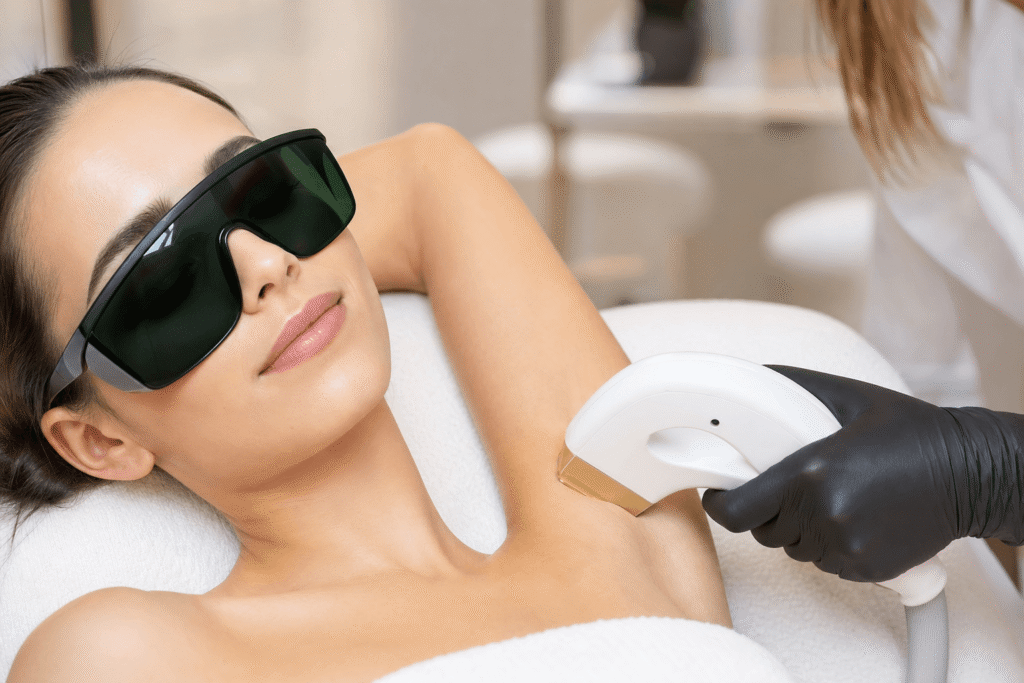
During Treatment: Your technician will clean the area and may apply numbing gel for sensitive areas. You’ll wear protective eyewear while the laser handpiece moves across your skin. Most people describe the sensation as a rubber band snapping against skin. Sessions last 15-60 minutes depending on the treatment area size.
Aftercare: Your skin may appear red and feel sunburned for a few hours after treatment. Apply ice packs and aloe vera to soothe discomfort. Avoid hot showers, exercise, and sun exposure for 24-48 hours. Use SPF 30 or higher daily to protect treated skin.
Results Timeline: Treated hairs shed gradually over 2-3 weeks. After 3-4 sessions, you’ll notice significantly less regrowth. After completing 6-8 sessions, most clients achieve 80-95% permanent reduction.
Ready to experience the benefits of permanent hair reduction? Book your free consultation at Arezoo Beaute and discover how our advanced laser technology can help you achieve smooth, hair-free skin.
Comparing Laser Types and Technologies for Different Skin Tones
Diode Lasers: Effective for light to medium skin tones (Fitzpatrick I-IV). Offers deep penetration and works well on most body areas. Best for people with darker hair and lighter to medium skin.
Alexandrite Lasers: Fastest treatment option with the largest spot size. Ideal for light to olive skin tones (Fitzpatrick I-III). Delivers excellent results on large body areas. Not recommended for darker skin tones due to increased risk of pigmentation changes.
Nd:YAG Lasers: Safest option for dark skin tones (Fitzpatrick IV-VI). Uses longer wavelengths that penetrate deeper while bypassing melanin in the skin’s surface. Works on all skin tones but is specifically designed for people with darker complexions.
At Arezoo Beaute, we use advanced technology suitable for all skin tones, ensuring safe and effective permanent reduction regardless of your complexion.
| Laser Type | Best For Skin Tone | Advantages |
|---|---|---|
| Alexandrite | Light to olive (I-III) | Fastest treatment, large areas |
| Diode | Light to medium (I-IV) | Deep penetration, versatile |
| Nd:YAG | All tones, especially dark (IV-VI) | Safest for dark skin |
Realistic Timeline: Hair Reduction Percentage After Each Session
Understanding what percentage of hair reduction to expect after each session helps you track progress and maintain realistic expectations throughout your treatment series.
After Session 1: 10-25% permanent reduction. You’ll notice shedding within 2-3 weeks, then regrowth as new hair enters the growth phase. Many people see little difference after the first session, which is completely normal. The laser targets only the 20-30% of hair actively growing during that appointment.
After Session 2: 20-40% permanent reduction. Results become more noticeable as more follicles are disabled. Hair-free periods last longer between sessions. You may notice that regrowth is slightly finer than before treatment began.
After Session 3: 30-50% permanent reduction. This is when most clients see dramatic improvements. Hair grows back noticeably thinner and sparser. Areas that were once dense with hair now show visible patches of smooth skin.
After Session 4: 45-65% permanent reduction. You may go several weeks without visible hair growth. Remaining hair is finer and lighter in color. Many clients report needing to shave only once per week instead of daily at this stage.
After Session 5: 60-75% permanent reduction. Results are substantial with minimal hair regrowth. Many clients feel satisfied at this stage, though continuing treatment maximizes long-term permanence. The hair that remains is typically much less noticeable than before starting treatment.
After Session 6: 70-85% permanent reduction. Most treatment areas appear nearly hair-free. Remaining hair is sparse and barely noticeable. You can often go months between shaving, and when hair does appear, it’s fine and light-colored.
After Sessions 7-8: 80-95% permanent reduction. Optimal results achieved for most clients. Any remaining hair is fine, light, and requires minimal maintenance. At this point, most people need only occasional touch-ups every 12-24 months to maintain completely smooth skin.
Individual results vary based on hair color, skin tone, hormonal factors, and treatment area. Facial hair and hormonally-influenced areas may require additional sessions to reach these percentages. Body areas like legs, arms, and back typically respond faster with fewer sessions needed to achieve maximum reduction.
Expert Tip: Take photos before each session to track your progress. Hair reduction happens gradually, and photos help you see the dramatic difference from start to finish, especially when results feel slow between sessions.
Is Laser Hair Removal Worth It for Permanent Results?
When you calculate the time and money spent on temporary hair removal methods over a lifetime, laser hair removal becomes highly cost-effective. The average person spends thousands of dollars and countless hours shaving or waxing over their lifetime.
Beyond financial savings, consider the quality of life improvements: no more razor burn, ingrown hairs, or daily shaving routines. You save time every single day and can wear anything with confidence, knowing your skin is smooth.
For most people, the permanent reduction achieved through laser hair removal makes it absolutely worth the investment. The initial cost is higher than razors or waxing, but the long-term benefits far outweigh the expense.
Frequently Asked Questions About Laser Hair Removal Permanence
Is laser hair removal permanent or temporary?
Laser hair removal is permanent hair reduction, not temporary. After completing your treatment series, 80-95% of treated hair is gone permanently. Results last for years or decades, though occasional maintenance sessions address hormonal changes or newly activated follicles.
How many laser hair removal sessions do I need for permanent results?
Most people need 6-8 sessions for optimal permanent reduction. Facial hair may require 8-10 sessions, while body areas typically need 6-8 sessions. Factors like hair color, skin tone, and hormones affect the exact number you’ll need.
How long does laser hair removal last after completing all sessions?
Results typically last several years to decades after completing your treatment series. Most clients need only occasional maintenance sessions every 12-24 months. The exact duration depends on hormones, hair characteristics, and the treatment area, but the reduction is considered permanent.
Why do I need maintenance sessions after my initial treatments?
Maintenance sessions address hair regrowth from hormonal changes, new medications, or previously dormant follicles that activate years later. These quick touch-ups (typically every 6-24 months) preserve your smooth results long-term and prevent significant regrowth.
Does laser hair removal work on all skin types and hair colors?
Modern laser technology works on all skin tones, especially Nd:YAG lasers designed for darker skin. However, it works best on dark hair because the laser targets melanin. Blonde, red, gray, and white hair contain less melanin and may not respond as well to treatment.
Experience Permanent Hair Reduction at Arezoo Beaute Montreal
At Arezoo Beaute, we use advanced laser technology specifically designed to deliver safe, effective permanent hair reduction for all skin tones. Our experienced technicians have helped thousands of Montreal clients achieve smooth, hair-free skin that lasts for years.
During your free consultation, we’ll assess your hair and skin type, discuss your goals, and create a customized treatment plan that maximizes your permanent reduction results. We’ll answer all your questions about the process, timeline, and expected outcomes so you can make an informed decision.
Ready to say goodbye to unwanted hair for good? Contact Arezoo Beaute today to schedule your free consultation and discover how permanent hair reduction can transform your beauty routine. Join the thousands of satisfied clients who have chosen us as their trusted provider for laser hair removal in Montreal.