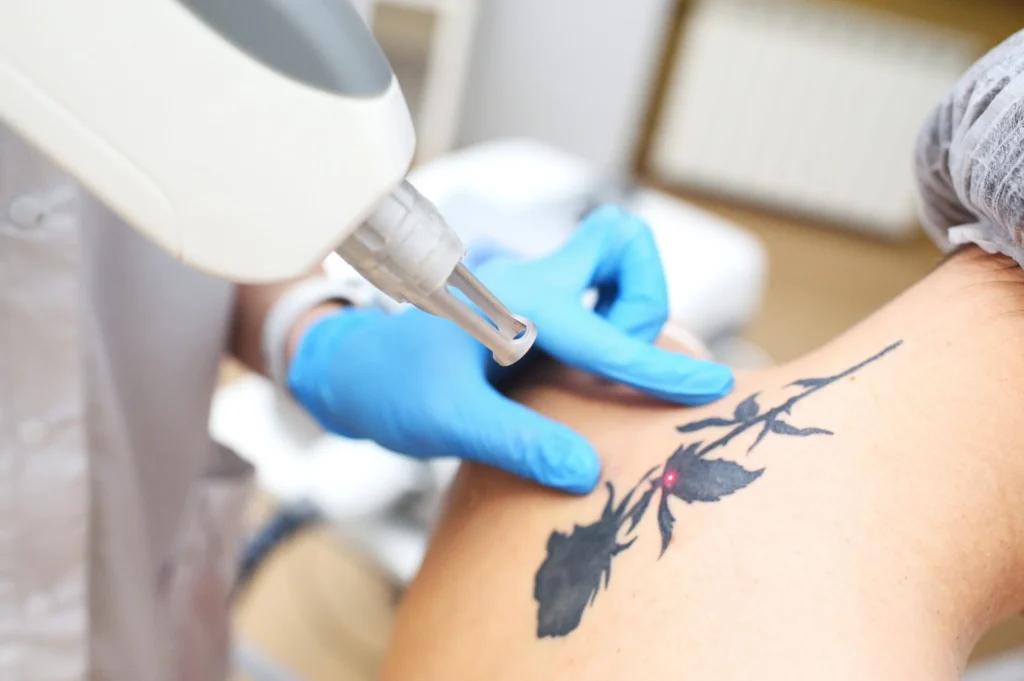
Tattoo removal is a non-surgical cosmetic procedure that uses advanced laser technology to safely break down tattoo ink particles beneath the skin. During the treatment, laser energy targets the pigment in the tattoo, fragmenting the ink into smaller particles that the body’s immune system gradually removes over time.
Modern laser tattoo removal is designed to treat a wide range of ink colors and skin tones while minimizing damage to the surrounding skin. Multiple sessions are usually required, depending on factors such as tattoo size, color, depth, and skin type.
At professional clinics, laser tattoo removal is performed in a controlled, medical-grade environment to ensure safety, precision, and effective results.

Loved by clients across the city, Arezoo Beaute is known for expert care, premium products, and stunning results that speak for themselves.
Most clients describe the sensation as mild to moderate discomfort, similar to a rubber band snap. Pain levels vary depending on the tattoo location and individual sensitivity.
The number of sessions depends on the tattoo’s size, color, depth, and age. Most tattoos require multiple sessions spaced several weeks apart for optimal results.
Darker colors such as black and dark blue respond best to laser treatment. Lighter colors may require additional sessions but can still be significantly faded.
Yes, when performed by trained professionals using appropriate laser settings, tattoo removal can be safely done on most skin types.
When proper techniques and aftercare instructions are followed, the risk of scarring is minimal. Avoid picking or scratching the treated area.
Session time varies depending on tattoo size, but most treatments take between a few minutes to 30 minutes.
Temporary redness, swelling, or sensitivity is normal and usually subsides within a few days.
Sessions are typically spaced 6 to 8 weeks apart to allow the skin to heal and the body to clear ink particles naturally.
Yes, laser tattoo removal can be targeted to specific areas, allowing for partial removal or preparation for a cover-up tattoo.
Yes, a consultation is essential to assess your tattoo, discuss expectations, and create a personalized treatment plan.