

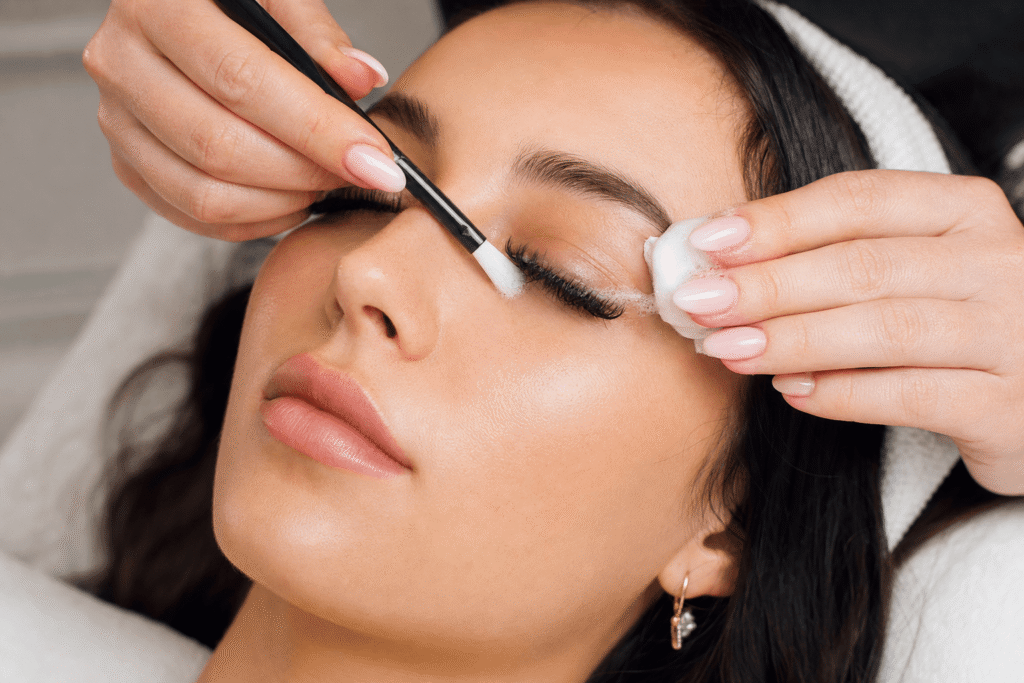
Most lash extension clients lose their beautiful volume not from poor application, but from inadequate daily cleaning. Learning how to clean lash extensions properly transforms them from a 2-week disappointment into a 6-week investment that consistently turns heads.
Your natural lashes shed daily whether you have extensions or not. Without proper cleansing, oil, makeup residue, and dead skin cells accumulate along the lash line, breaking down the adhesive bond and creating an environment where bacteria thrive. The result? Extensions that fall out prematurely, irritated lids, and potentially serious eye infections.
At Arezoo Beaute in Montreal, our lash specialists have refined cleaning protocols over nine years of application experience. We see the difference between clients who follow proper cleansing routines and those who skip this crucial step. The contrast shows in retention rates, lash health, and the number of refills required.
This guide walks you through professional cleaning techniques, product selection, common mistakes that damage extensions, and the daily routine that keeps your lashes looking freshly applied for weeks.
Key Takeaways
- Clean lash extensions daily using oil-free foaming cleanser for best retention
- Brush lashes gently after cleaning to maintain shape and prevent tangles
- Avoid waterproof makeup and oil-based products near your eye area
- Pat dry with lint-free cloth, never rub or pull extensions
- Professional cleaning at refills extends wear time and protects eye health
Why Daily Cleaning Is Essential for Lash Extension Health
Your eyelids produce natural oils throughout the day. These oils serve an important purpose for your natural lashes, but they actively work against lash extension adhesive. As sebum accumulates along the lash line, it slowly dissolves the cyanoacrylate bond holding each extension to your natural lash.
Dead skin cells shed from your eyelids constantly. Without daily removal, these cells mix with oils and makeup residue to create a film that coats both your natural lashes and extensions. This buildup becomes visible as a grayish or yellowish residue at the base of your lashes, a telltale sign of inadequate cleaning.
The warm, moist environment near your eyes combined with organic debris creates ideal conditions for bacterial growth. Demodex mites, which naturally live on human skin, proliferate in unwashed lash lines. While small populations cause no harm, overgrowth leads to inflammation, redness, and conditions like blepharitis that require medical treatment.
Clean extensions last significantly longer. Clients who cleanse daily typically maintain 70-80% of their extensions at the 3-week mark, while those who skip cleaning often lose 50% or more in the same timeframe. The math becomes clear when you calculate refill frequency and cost over several months.
Expert Tip from Arezoo Beauté
We notice clients who wash their lashes every evening before bed maintain better retention than those who cleanse in the morning. Removing the full day’s buildup before sleep prevents prolonged adhesive exposure to oils and debris during the 7-8 hours your eyes are closed.
Choosing the Right Lash Extension Cleanser
Not all cleansers work safely with lash extensions. The wrong product dissolves adhesive bonds faster than natural oil production, causing premature fallout that clients often blame on poor application rather than their own product choices.
Oil-free foaming cleansers formulated specifically for lash extensions provide the most effective cleaning without compromising adhesive integrity. These products typically feature gentle surfactants that lift debris without harsh scrubbing. Look for cleansers with a pH between 5.5 and 7.0, matching the natural pH of your tear film.
Avoid these common products that damage extensions:
- Micellar waters containing oil or glycerin
- Cream or lotion cleansers with emollients
- Baby shampoo, despite its popularity in old advice (it contains moisturizing agents)
- Makeup removers not specifically labeled oil-free and extension-safe
- Face cleansers with coconut oil, mineral oil, or silicones
Professional-grade lash cleansers often include ingredients that actually benefit extension longevity. Sodium hyaluronate provides hydration without oil. Chamomile and aloe extracts soothe the delicate eyelid skin. Some formulas incorporate biotin to strengthen natural lashes growing beneath extensions.
At Arezoo Beaute, we recommend specific cleansers to our volume lash extension clients during their aftercare consultation. The investment in proper cleanser, typically $15-25 for a bottle lasting 2-3 months, pays for itself in extended wear time and reduced refill frequency.
AREZOO BEAUTÉ
Ready to enhance your natural beauty?
Book your consultation today and let our expert team help you choose the perfect treatment for your goals.
Step-by-Step Daily Cleaning Technique
Proper cleaning requires technique, not just product. Many clients use the right cleanser but apply it incorrectly, achieving suboptimal results that compromise both extension longevity and eye health.
Start by washing your hands thoroughly. Your fingers carry oils that transfer to your lashes during cleaning. Use soap and water, then dry completely before touching your eye area.
Wet your closed eyelids with lukewarm water. Temperature matters because hot water can weaken adhesive bonds while cold water fails to effectively dissolve oils. Lukewarm water opens pores slightly without causing thermal stress to the adhesive.
Dispense a pump of foaming cleanser onto your fingertips or a specialized lash cleansing brush. If using fingers, work the product into a light foam before application. Brushes designed for lash extensions feature soft bristles that reach between extensions without pulling.
Apply cleanser to your closed eyelid using gentle downward strokes from lash line toward the tips. Never scrub side to side, which tangles extensions and stresses the adhesive bond. Focus on the lash base where debris accumulates, but coat the full length of extensions.
Let the cleanser sit for 15-20 seconds. This contact time allows surfactants to break down oils and loosen debris. Rushing through this step reduces cleaning effectiveness significantly.
Rinse thoroughly with lukewarm water, ensuring no cleanser residue remains. Product buildup causes the same retention issues as insufficient cleaning. Rinse until water runs clear and you feel no slickness on your lashes.
Pat dry gently with a clean, lint-free towel. Avoid cotton towels that shed fibers which catch in extensions. Microfiber cloths or paper towels work well. Press the towel against your lashes rather than wiping, which can pull extensions loose.
Clients frequently ask how long this process takes. With practice, thorough cleaning requires only 60-90 seconds per eye. The time investment prevents problems that cost hours of your day and hundreds of dollars in premature refills.
Brushing and Maintaining Extension Shape
Cleaning removes debris, but brushing maintains the aesthetic appeal that makes extensions worthwhile. Lashes naturally cross and tangle throughout the day, especially during sleep. Without daily brushing, extensions develop a matted appearance that defeats their purpose.
Use a clean spoolie brush specifically designated for your lashes. Never share lash brushes, even with family members, as this transfers bacteria. Disposable spoolies offer the most hygienic option, though quality reusable brushes cleaned weekly work well.
Brush your extensions after they dry completely. Wet lashes are vulnerable to damage because water temporarily softens the adhesive. Wait 10-15 minutes after cleaning before brushing.
Start at the base of your lashes and brush upward and outward in the direction of extension curl. Use gentle strokes, never forcing the brush through tangles. If you encounter resistance, work carefully from the tips downward until the tangle releases.
Brush in small sections rather than attempting to comb all lashes at once. Divide your lash line into 3-4 sections and work through each thoroughly. This sectional approach prevents pulling on multiple extensions simultaneously.
The team at Arezoo Beaute demonstrates proper brushing technique during every hybrid lash extension application. We send clients home with a complimentary spoolie and emphasize that 30 seconds of daily brushing prevents most common extension problems we see at refill appointments.
Some clients need to brush twice daily. If you sleep on your side or face, morning brushing reshapes extensions compressed during sleep. Those who work in dusty or windy environments benefit from midday brushing to remove environmental debris.
Expert Tip from Arezoo Beauté
When clients arrive for refills with tangled, crossed extensions, we can trace the pattern back to their sleeping position. Side sleepers show compression on one eye. Brushing immediately after waking, before extensions set in their tangled position, maintains better symmetry between appointments.
Common Cleaning Mistakes That Damage Extensions
Even clients committed to daily cleaning often make errors that undermine their efforts. These mistakes range from product selection to application technique, each compromising extension longevity in distinct ways.
Using too much cleanser ranks among the most common errors. Excess product becomes difficult to rinse completely, leaving residue that attracts more dirt than it removes. A pump of foaming cleanser or pea-sized amount of gel cleanser suffices for both eyes.
Scrubbing aggressively defeats the purpose of gentle cleansing products. Harsh physical action stresses adhesive bonds and can pull extensions loose. The chemical action of proper cleanser does the work when given adequate contact time.
Skipping the lash line where extensions attach represents a critical oversight. Clients often clean the length of extensions while barely touching the base, leaving the area with the most buildup essentially unwashed. Debris accumulates exactly where adhesive bonds to natural lashes.
Rinsing with water temperature extremes causes problems many clients never connect to their cleaning routine. Very hot water can soften adhesive enough to cause slippage, while cold water fails to fully remove oils that require mild heat for effective dissolution.
Towel-drying too vigorously pulls at extensions when they are most vulnerable. Wet adhesive bonds have reduced strength for several minutes after water exposure. Aggressive drying during this window causes more fallout than any other single aftercare mistake.
Using regular facial cleanser on extensions introduces oils, emollients, or active ingredients incompatible with adhesive chemistry. Even oil-free face washes often contain moisturizing agents that break down lash glue over days or weeks.
Applying eye cream or moisturizer too close to the lash line undermines even perfect cleaning technique. These products migrate toward your eyes throughout the night, coating lash bases with oil-based ingredients. Keep all skincare products at least 5mm away from your lash line.
What to Avoid Around Your Extensions
Maintaining clean lash extensions requires both active cleaning and avoidance of contaminating products and behaviors. Many clients diligently cleanse while simultaneously exposing their lashes to substances that undo their cleaning efforts.
Oil-based makeup removers represent the most damaging product category. Even when used carefully away from extensions, these formulas inevitably migrate to your lash line. The oils they contain dissolve adhesive on contact, causing extensions to shed within hours of application.
Waterproof mascara creates multiple problems for extension wearers. The film-forming polymers that make it water-resistant also make it nearly impossible to remove without oil-based solvents. Clients who use waterproof mascara on extensions face an impossible choice between inadequate cleaning and using products that destroy adhesive.
Steam exposure from hot showers, saunas, or facial steamers weakens adhesive bonds when experienced regularly. While a single steam session causes minimal damage, daily hot showers with steam hitting your face directly reduces extension retention measurably. Angle your face away from direct water flow and keep shower temperature moderate.
Touching or rubbing your eyes throughout the day transfers oils from your fingers to your lashes. This unconscious habit introduces more contamination than any product you might use. Clients with allergies or dry eyes who frequently rub their eyes make poor candidates for extensions unless they modify this behavior.
Sleeping face-down compresses extensions and rubs them against your pillow for hours. This mechanical stress loosens adhesive bonds and creates tangles that prove difficult to fix with brushing. Side sleeping causes similar problems for one eye. Back sleeping protects extensions best, though silk or satin pillowcases reduce damage for those unable to change sleeping positions.
Swimming pools introduce chlorine, which degrades adhesive over time. Ocean water contains salt that dries on lashes and attracts moisture. If you swim regularly, rinse your lashes with fresh water immediately after exiting the pool or ocean, then clean normally with your foaming cleanser once home.
Professional Maintenance During Refill Appointments
Home cleaning maintains extensions between appointments, but professional maintenance at refills addresses buildup your daily routine cannot fully prevent. The deep cleaning techniques lash artists use during refills extend overall wear time and protect the health of your natural lashes.
Professional-grade cleansers available only to licensed technicians feature stronger formulations that remove stubborn residue without damaging extensions. These products can dissolve protein buildup and remove the thin film that develops despite daily home cleaning.
Lash artists use specialized tools unavailable to consumers. Micro-brushes reach tight spaces between individual extensions. Precision nozzles rinse away debris from the lash line that manual rinsing misses. These tools make professional cleaning more thorough than even the most diligent home routine.
During refill appointments at Arezoo Beaute, our specialists examine each client’s lashes under magnification. We identify early signs of blepharitis, Demodex infestation, or other conditions that require medical attention before they become serious. This health screening component of professional cleaning catches problems clients cannot see or diagnose themselves.
The deep cleaning performed during refills prepares your lash line for new extension application. Any residue remaining on natural lashes prevents proper adhesive bonding for new extensions. Professional pre-service cleaning ensures new extensions bond to completely clean natural lashes, maximizing retention between this appointment and your next.
Refill frequency depends partly on your home cleaning consistency. Clients with excellent daily cleaning routines typically need refills every 3-4 weeks. Those with adequate cleaning require appointments every 2-3 weeks. Poor cleaning necessitates refills every 1-2 weeks, dramatically increasing the cost and time commitment of maintaining extensions.
Our lash specialists at Arezoo Beaute adjust the professional cleaning process based on what we observe at each appointment. Clients with oily skin receive additional cleansing steps. Those with sensitive eyes get gentler formulations. This customization reflects the individualized approach that has earned us a 4.9-star rating across hundreds of reviews from Montreal clients.
When to Seek Professional Help
Certain signs indicate problems requiring professional attention beyond routine cleaning. Ignoring these symptoms leads to more serious complications that may require removing extensions entirely and allowing your natural lashes to recover.
Persistent itching around your lash line despite daily cleaning suggests possible infection or allergic reaction. Mild itching during the first 24 hours after application is normal, but itching that continues or develops after your lashes have settled indicates a problem.
Redness that does not resolve within a day signals inflammation that may progress to infection. While slight pinkness immediately after application results from eye exposure during the procedure, sustained or increasing redness requires evaluation.
Discharge from your eyes, whether clear, white, yellow, or green, indicates infection that requires medical treatment. Continue cleaning gently but avoid aggressive scrubbing that spreads bacteria. Contact your lash artist and consider consulting a physician.
Swelling of your eyelids suggests allergic reaction or infection. Mild puffiness may result from crying, poor sleep, or dietary factors, but pronounced swelling or swelling accompanied by other symptoms needs professional assessment.
Excessive lash loss beyond normal shedding patterns indicates either poor extension application or inadequate home care. Losing 2-5 extensions daily falls within normal ranges. Losing 10 or more daily, especially if they fall out with your natural lashes attached, signals a problem.
If you notice these symptoms, contact the salon where you received your extensions immediately. At Arezoo Beaute, we provide complimentary consultations for clients experiencing problems with their lashes. Our team has extensive training in identifying common complications and determining whether symptoms require medical referral.
In some cases, the best solution involves removing extensions temporarily to allow treatment and healing. While disappointing, this approach prevents long-term damage to your natural lashes and eye health. Proper treatment of underlying conditions means you can return to wearing extensions once resolved.
Frequently Asked Questions
Proper lash extension care transforms them from a high-maintenance beauty treatment into an effortless enhancement that becomes part of your daily routine. The cleaning techniques outlined above protect your investment while maintaining the eye health that makes wearing extensions safe long-term.
At Arezoo Beaute, our PHI-certified specialists have refined these protocols through nine years of professional practice in Montreal. We combine international certification standards with hands-on experience serving hundreds of clients to deliver both beautiful results and the education you need to maintain them. Our 4.9-star rating reflects our commitment to thorough aftercare training that starts during your application appointment and continues through every refill. Visit our booking page to schedule your lash extension consultation or contact our Rockland Road location at (514) 814-8007 to discuss which extension style suits your lifestyle and maintenance preferences best.